

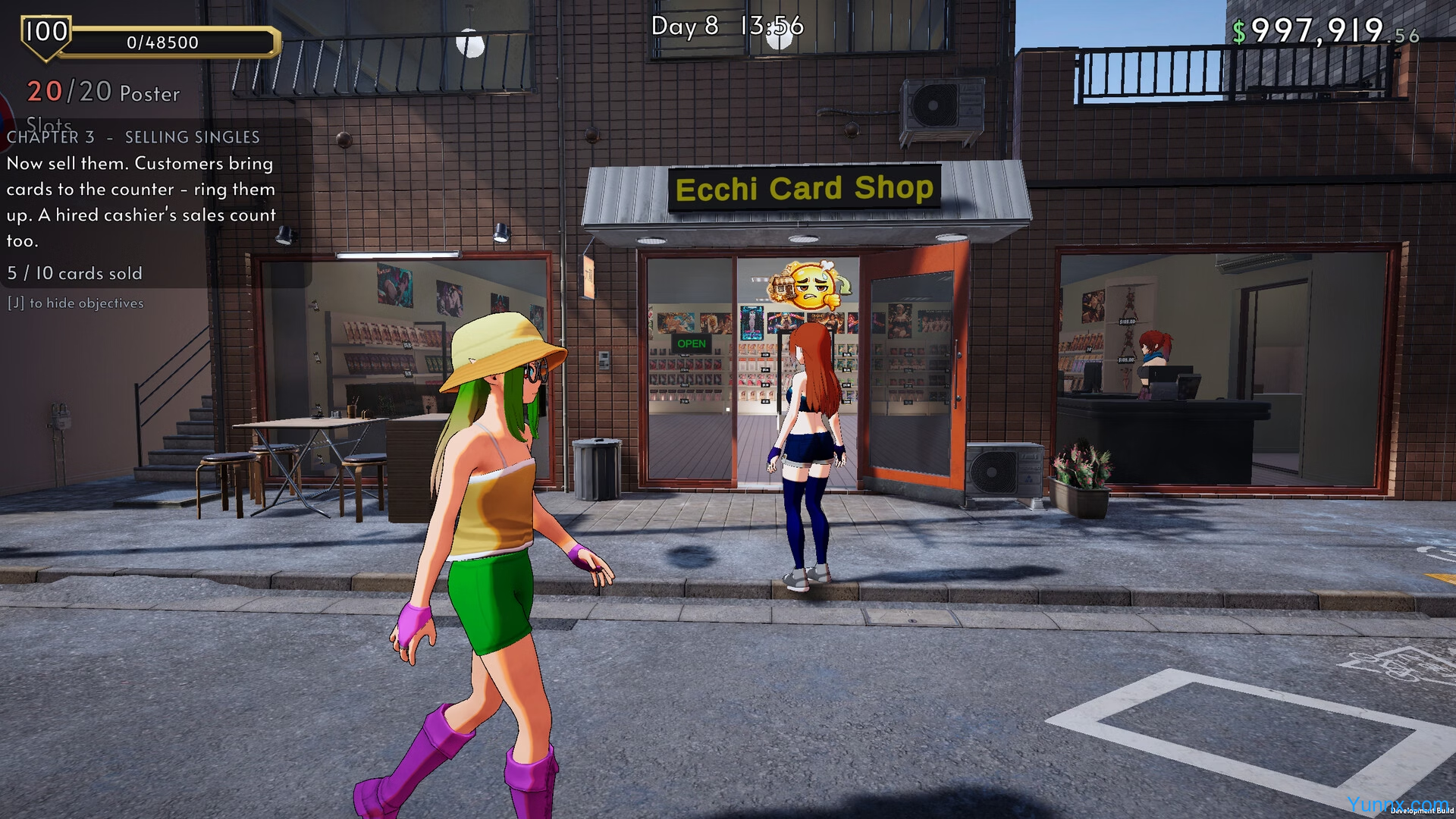
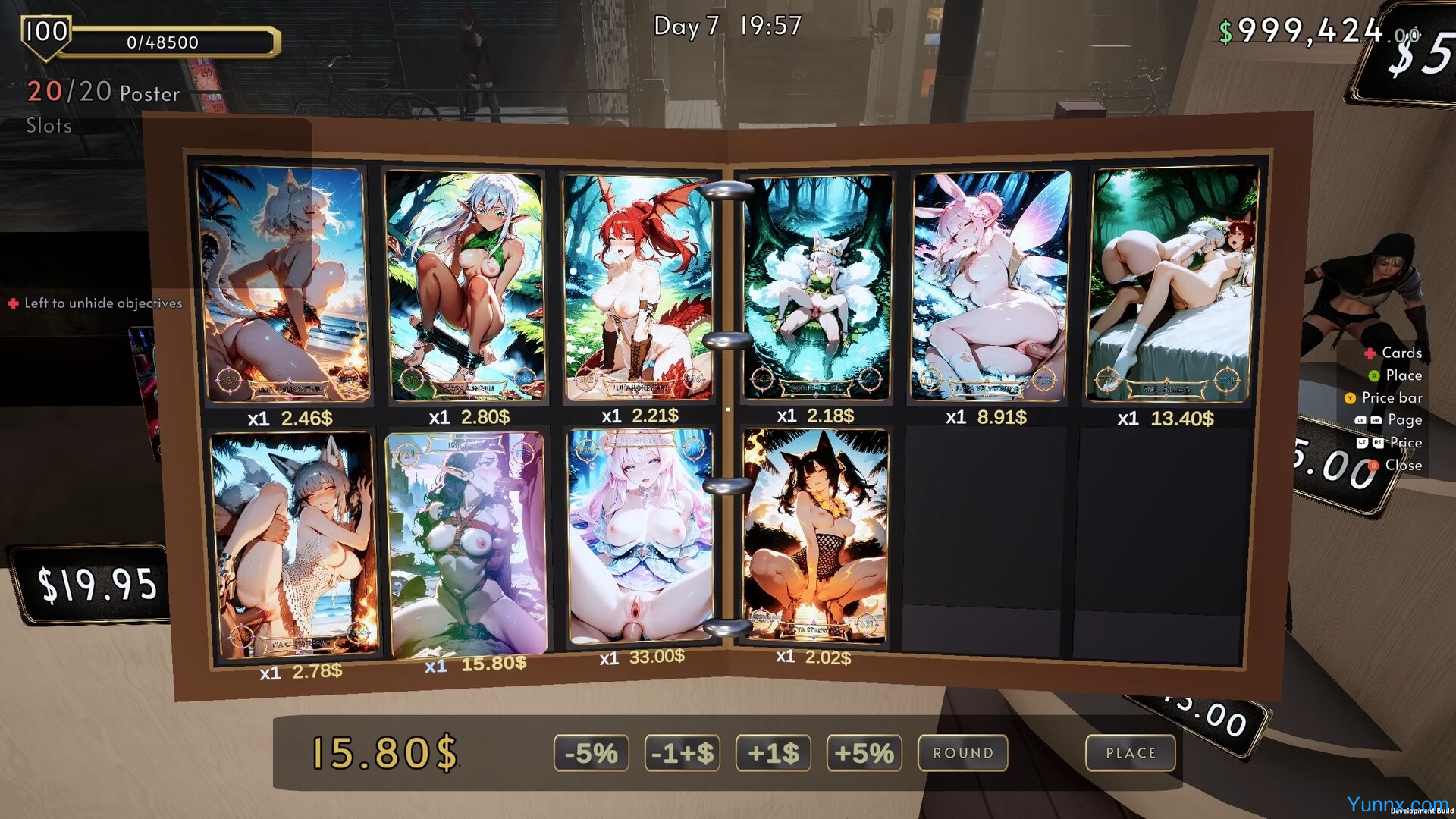
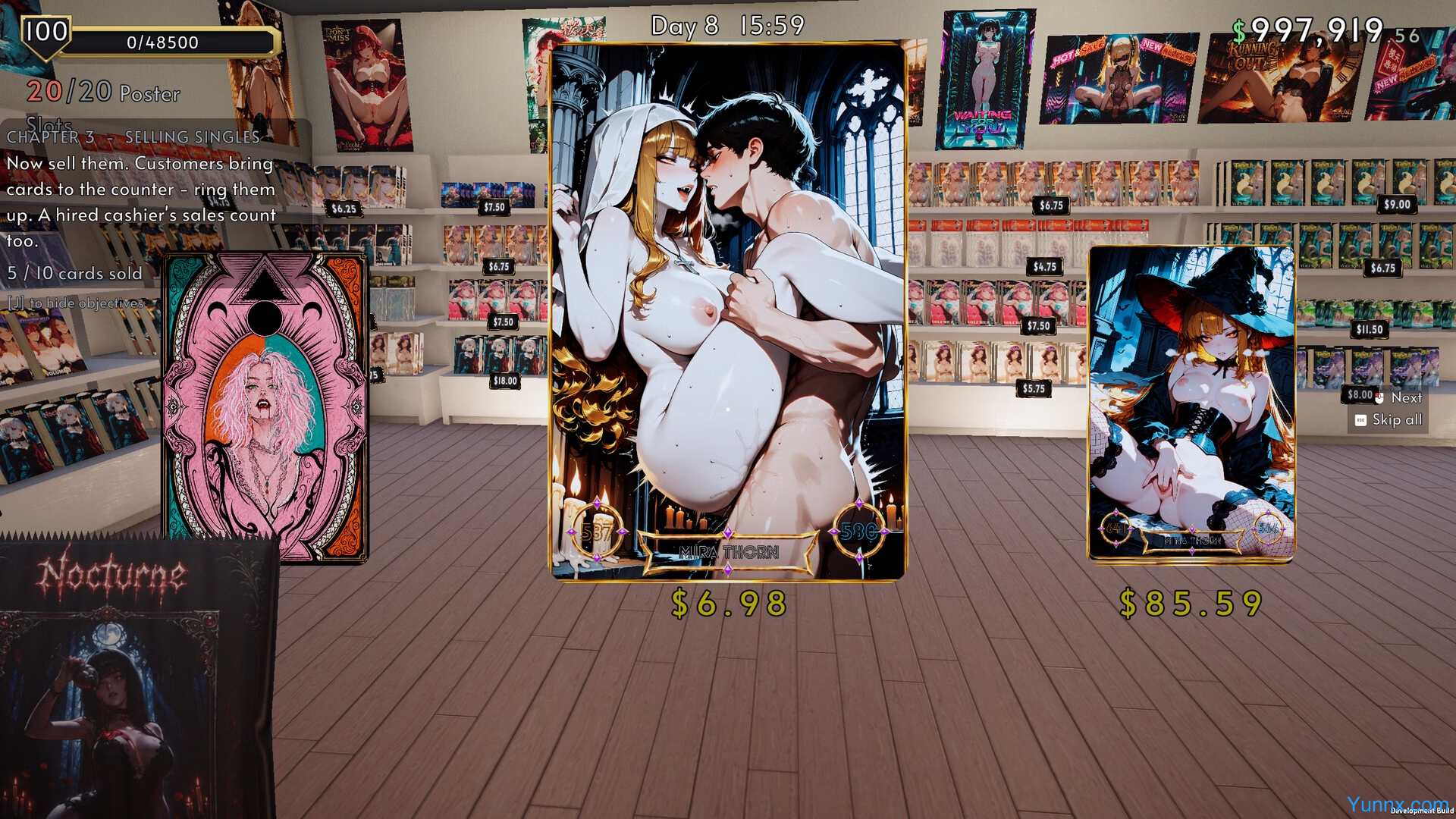
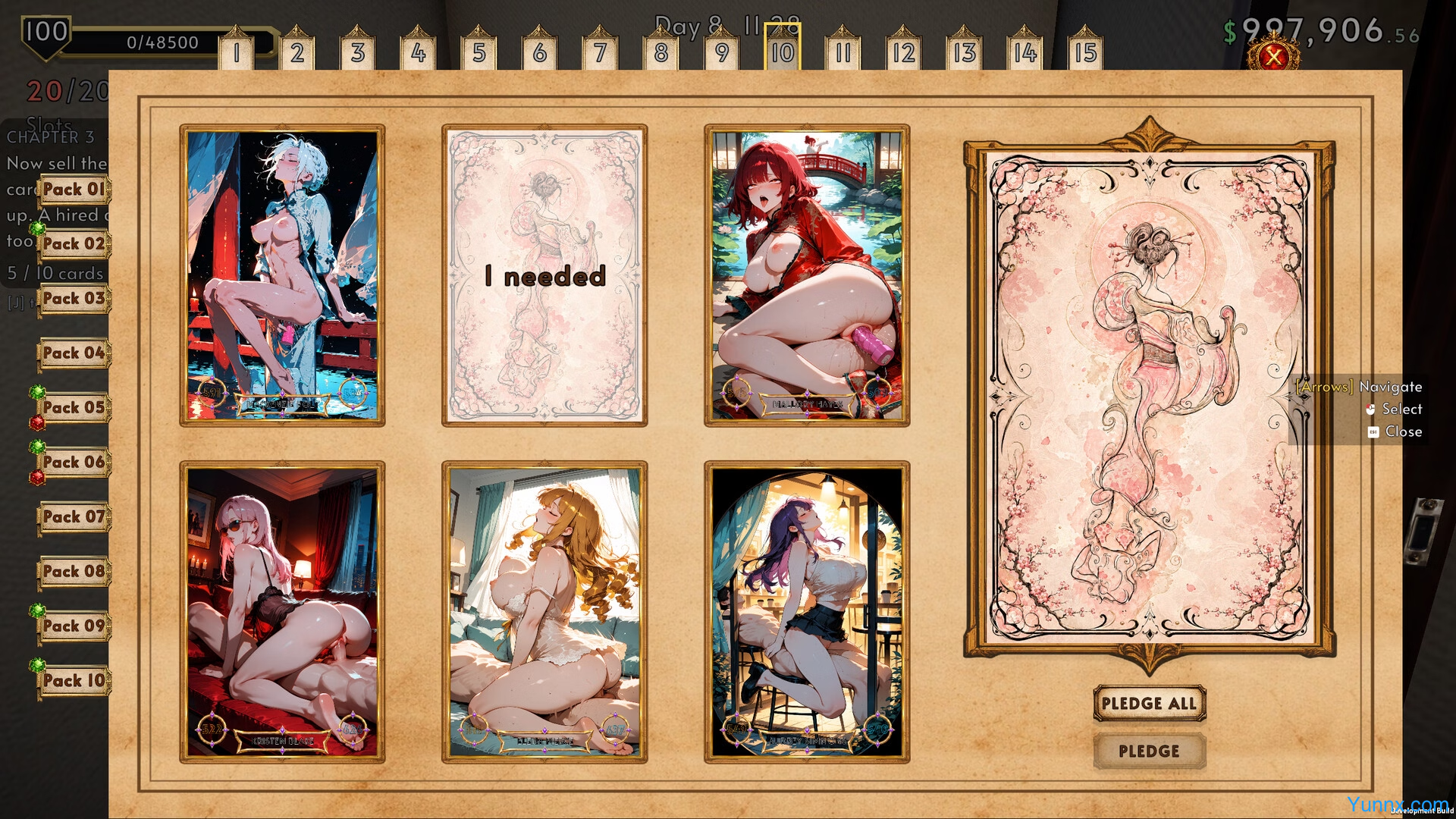
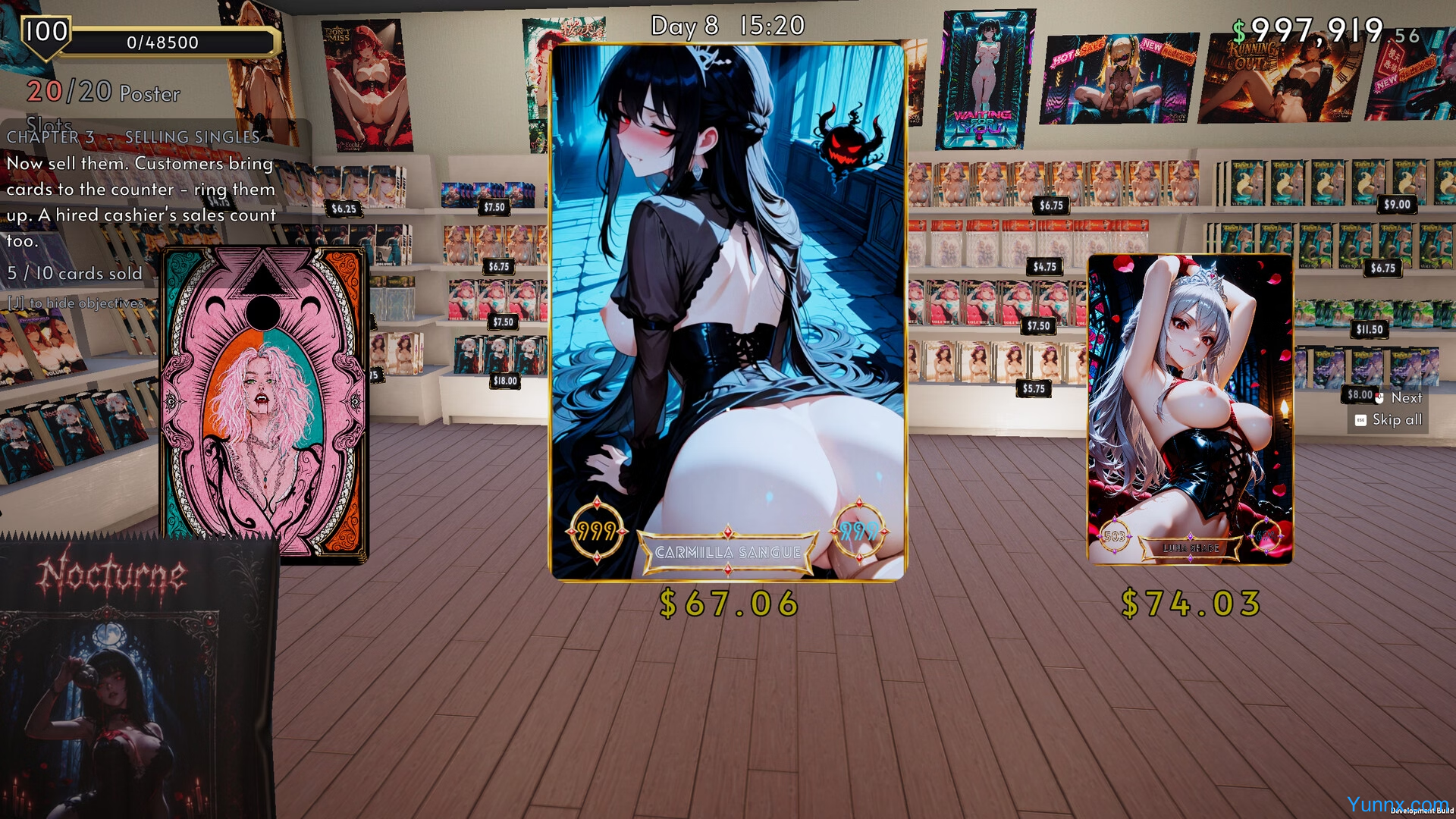
Ecchi Card Shop Simulator puts you behind the counter of a small store where booster packs run the economy. Buy stock, set your own margins, and listen to the register ring. Rare pulls can clear your bills for the week or disappear into your personal collection for after-hours browsing.
Build the shop, set the price, own the margin
1. You start with bare shelves and a till that barely clicks. Money comes from one place only: what you choose to carry and what you decide to charge. There is no fixed price list handed to you by the game. The margin is yours to set, and yours to lose.
2. Stocking is a daily bet. Some boxes move fast and pay little. Others sit heavy on the shelf until the right customer walks in and clears them out in one go. Reading the room matters more than reading a spreadsheet, though you will build plenty of both.
3. Growth shows in the floor plan. More racks, better displays, a back room that stops feeling like a closet. The satisfaction is quiet and cumulative: the day you stop counting single bills and start counting stacks is the day the game stops being a struggle and starts being a habit.
The pull is the heartbeat
1. Everything on the shelf exists to feed one moment: foil catching the light, the weight of the pack in hand, the slow reveal that tells you whether today was worth it. The shop is the engine. The pull is the reason anyone keeps coming back.
2. Exotic hits are the currency spike everyone chases. Sell one and the week's rent vanishes as a problem. Hold onto it and you have leverage — for trade, for favors, for the kind of inventory you cannot buy outright. The choice is never obvious, and that is deliberate.
3. Not every pack lands. Most do not. The dead pulls still cost money, and a bad streak will make you reconsider how much stock you ordered and which customers you trust to come back. Risk lives in the ordering screen as much as it does in the reveal.