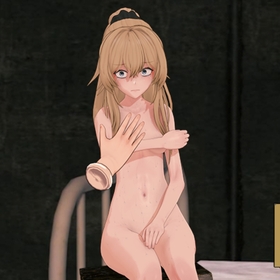

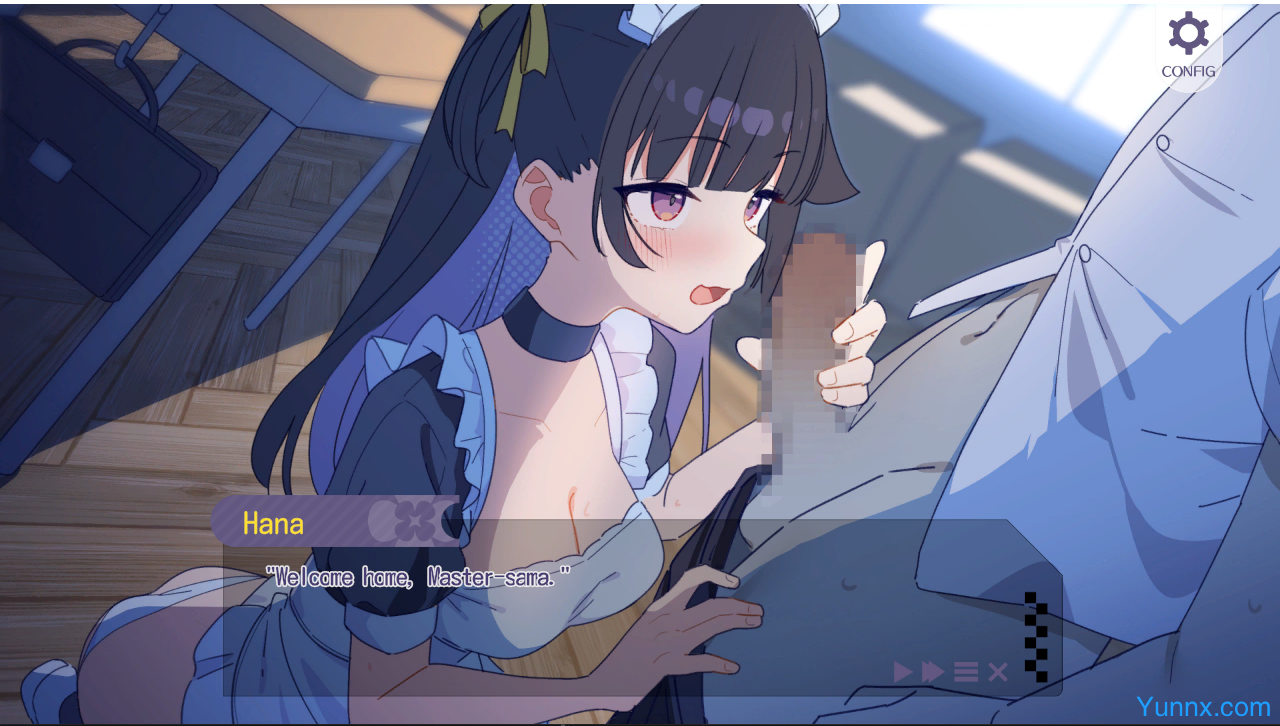

One day after school, you return to the classroom for something you forgot. What you find instead is Miyabi Hana—your quiet, clumsy classmate—in a situation she never wanted anyone to see. She catches you watching. You catch her breath hitching. A deal is struck. In exchange for your silence, Miyabi promises "a good time." But she doesn't stop there. She needs more than secrecy. She needs a teacher.
The Secret That Binds You Both
1. It starts with a forgotten item. A phone charger. A notebook. Something you left behind after the last bell rang and the hallways emptied out. You push the classroom door open expecting silence. Instead, you hear a sharp inhale. Miyabi Hana—the girl who trips over her own feet in gym class, the girl who blushes when a teacher calls on her—is doing something she absolutely should not be doing in an empty classroom. And she knows you saw.
2. The power shifts immediately. You're not a hero. You're not a villain. You're a witness. Miyabi's face burns red, her hands shaking as she scrambles to fix her uniform. She begs. She offers. She says the words that change everything: "I'll do anything. Just don't tell anyone." The air in that classroom thickens. You're not just holding her secret anymore. You're holding her.
3. What makes this opening so effective is the ambiguity. The game never tells you whether Miyabi is genuinely desperate or quietly relieved. Her clumsiness—the stumbling, the stammering, the way she can never quite meet your eyes—takes on a new meaning. Was she always this flustered around you? Or is this the first time she's let someone see the real Miyabi Hana underneath the awkward schoolgirl act?
The Deal: Silence for Submission
1. Miyabi's proposition is simple and devastating. She will give you "a good time"—her exact words, whispered with eyes squeezed shut—if you promise to keep what you saw a secret. But the game doesn't let you take that deal and walk away clean. You're not just accepting her body. You're accepting responsibility for her. Because Miyabi doesn't know how to do this. She doesn't know what she's offering. And she's trusting you to teach her.
2. The transactional nature of the arrangement is the engine of the entire game. Every interaction carries the weight of that initial bargain. When Miyabi sits next to you during study hall, her thigh pressed against yours under the desk, you both know what's happening. When she texts you after midnight asking if she can come over "to study," the subtext is screaming. The game lets you lean into the arrangement or soften it. You can treat Miyabi like a transaction. Or you can teach her that she's worth more than the secret she's trying to bury.
3. And Miyabi herself is not passive. She pushes. She asks questions. She wants to understand what her body is capable of, and she wants you to be the one who shows her. There's a hunger underneath the clumsiness—a curiosity that she's been too embarrassed to explore alone. Your deal with her isn't just a leash. It's a key. And Miyabi is waiting for you to turn it.
Teaching Her Everything: From Textbooks to Touch
1. The "teaching" in This Clumsy Girl Want To Learn! operates on two levels. On the surface, you're helping Miyabi with her studies—math problems, history essays, English vocabulary. But every tutoring session blurs into something else. Her pencil slips. Her hand lands on your thigh. She asks you to check her work, leaning over your shoulder so close you can smell her shampoo and feel her breath on your neck. The line between academic instruction and physical exploration is thin, and Miyabi keeps stepping over it.
2. But the real education is physical. Miyabi doesn't know how to kiss. She doesn't know how to use her hands. She doesn't know what sounds she makes when she feels something she likes. The game frames every intimate scene as a lesson. You're not just taking. You're demonstrating. You're correcting. You're watching Miyabi's eyes widen when she discovers something new about her own body, and you're the one who put that discovery there.
3. The progression is deliberate. Miyabi starts clumsy, awkward, unsure where to put her hands or how to move her hips. By the later routes, she's confident—still clumsy in her own way, still tripping over her words, but now she knows exactly what she wants and how to ask for it. The game tracks this transformation. Every lesson you teach her, every boundary you push, every moment she lets go of her embarrassment and leans in—it all compounds. Miyabi stops being the girl who got caught. She becomes the girl who caught you.
From Secret to Something More
1. The secret that started everything becomes the foundation of something neither of you expected. What began as blackmail-adjacent leverage—her exposure in exchange for her body—slowly shifts. Miyabi stops treating you like a threat. You stop treating her like a prize. The deal doesn't go away. It evolves. The same words that once sounded like a plea now sound like an invitation.
2. The game's strength is its emotional ambiguity. Miyabi is clumsy. She's awkward. She's not a femme fatale or a seductress. She's a girl who got caught doing something embarrassing and decided to make the best of a terrible situation—and then kept making the best of it until the situation started to feel like something she actually wanted. You're not corrupting her. You're not saving her. You're teaching her. And she's learning faster than either of you anticipated.
3. That's what makes This Clumsy Girl Want To Learn! stick with you after the credits roll. It's not the explicit scenes, though they're plentiful and unflinching. It's the small moments. Miyabi's hand finding yours under the desk during a boring lecture. A text that says "I need help with chapter 7" at 1 AM. The way she stumbles over her words when she tries to say something real. The clumsiness never goes away. It just becomes something you love instead of something she hides.