
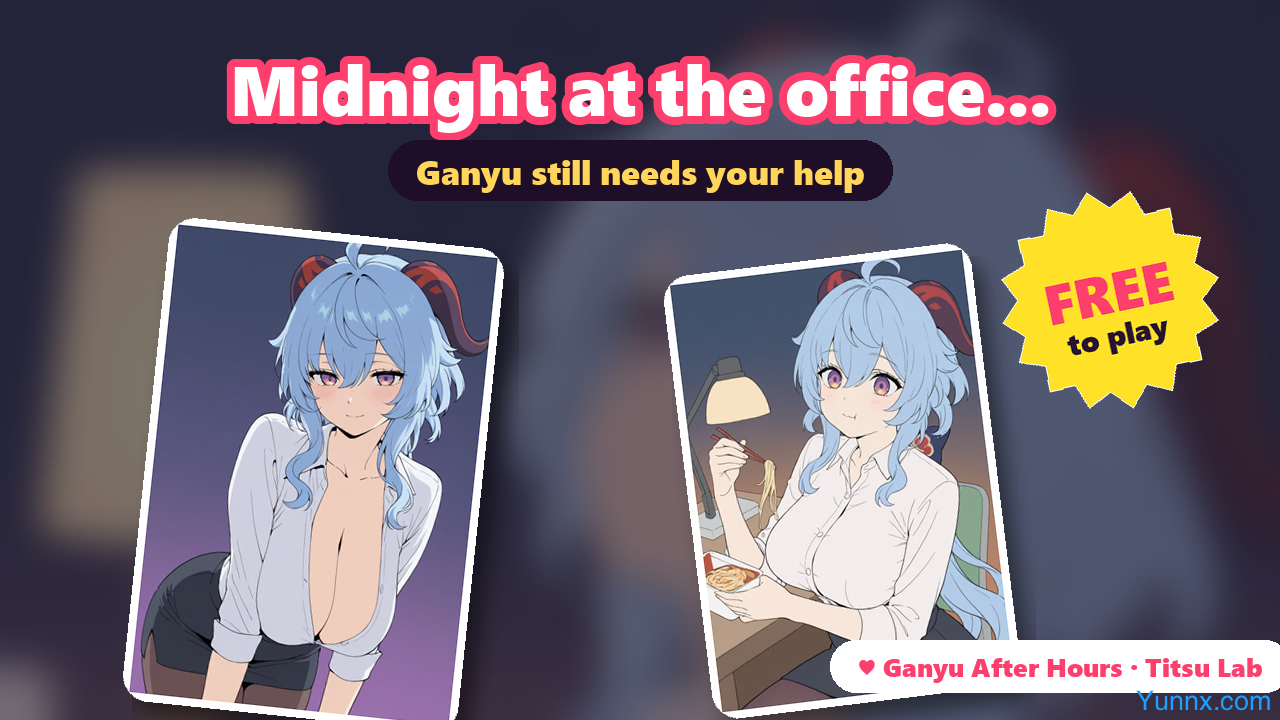
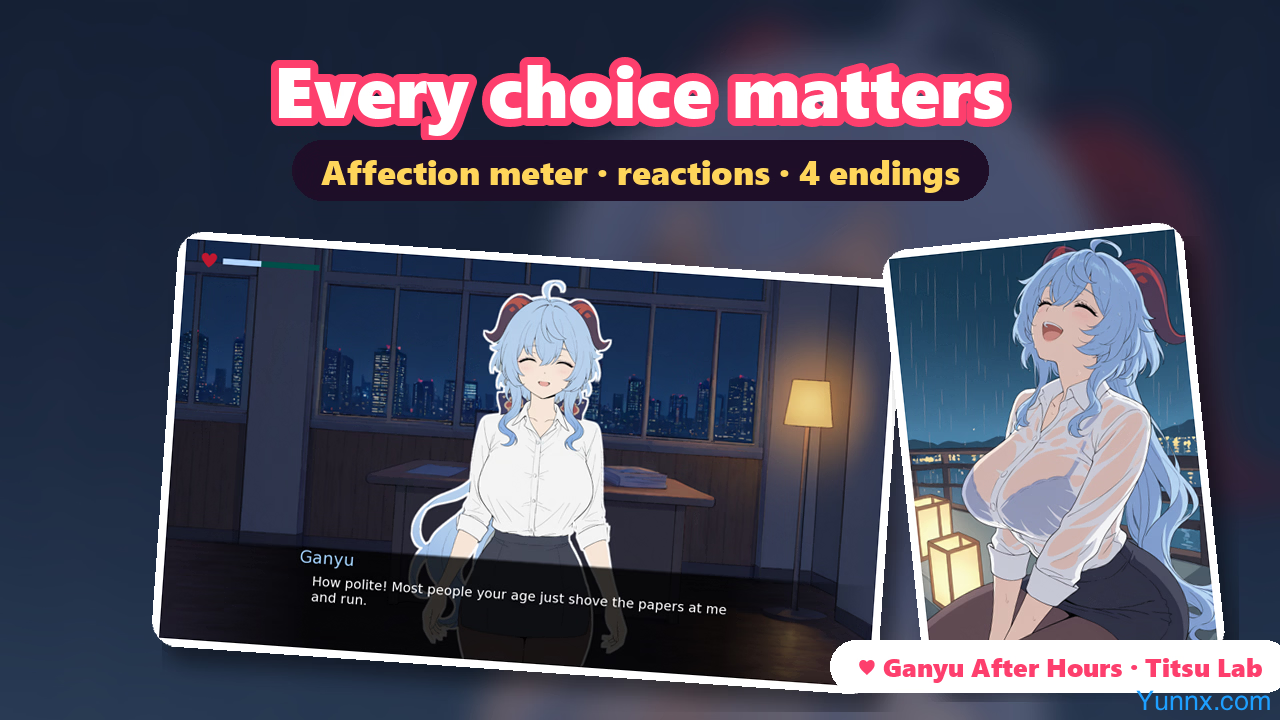
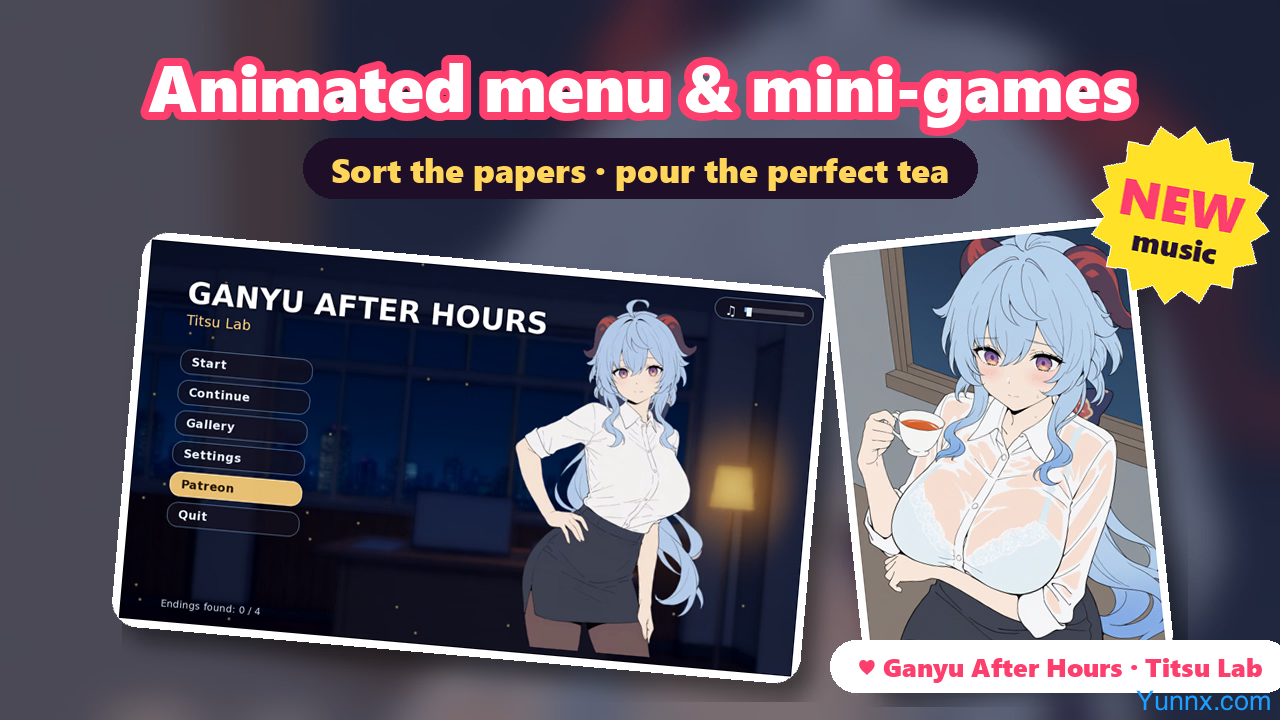
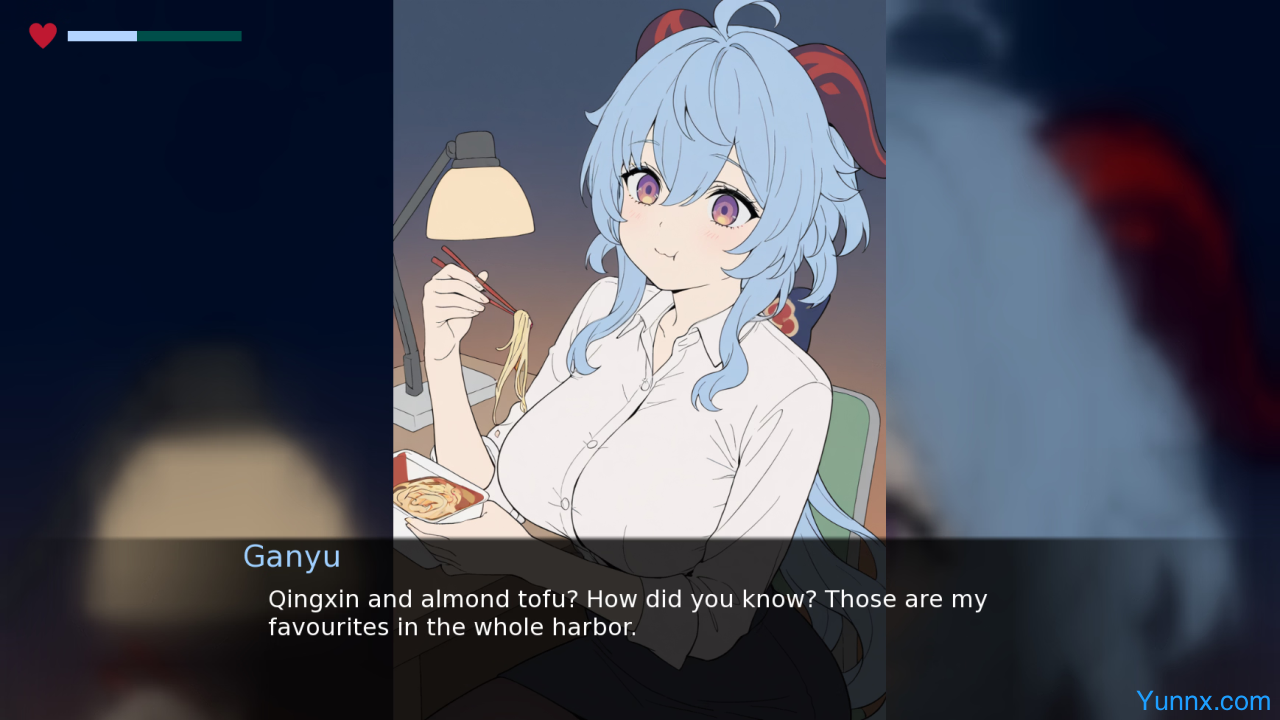
Ganyu After Hours is a short-form adult visual novel set during your first week at the Liyue Ministry. The premise is simple: the workday ends, the building empties, and Ganyu remains at her desk with a stack of documents that will not finish themselves. You can leave. You can stay. The game tracks the conversations you choose to have and the silences you choose to sit through, and the night ends differently depending on how much of yourself you pour into her overtime.
The Ministry After Dark and the Weight of an Empty Building
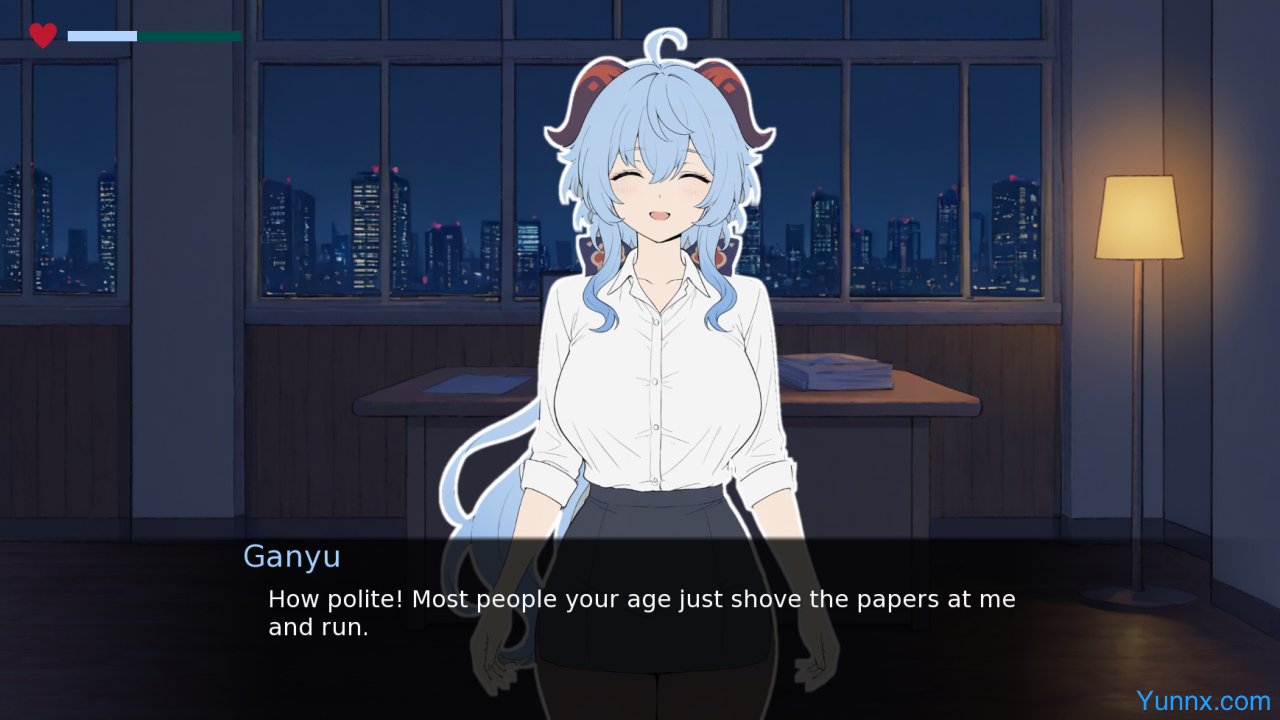
1. The Ministry at midnight is not the same building it was at noon. The corridors are empty. The clerks have gone home. The only light comes from Ganyu's desk lamp and the glow of her screen, and the game renders that isolation with deliberate attention: the hush of a building with no witnesses, the scratch of a pen, the soft clink of a teacup she has forgotten to drink from. The setting is not background. It is the pressure that makes every conversation feel like it is happening somewhere it shouldn't.
2. Your first week frames the entire encounter. You are new. You are nobody. Ganyu outranks you in every way that matters, and the game leans on that imbalance. She is the secretary to the Qixing, the half-qilin who has served Liyue for longer than you have been alive. You are a junior clerk who should not be here after hours. The gap between her station and yours is the tension the game builds every scene on, and closing it is the entire arc.
3. The paperwork is the excuse and the clock. Ganyu does not stop working because you are there. She keeps sorting, stamping, and reading while you hover, and the game measures progress by how much of her attention you can steal from the documents. A conversation that pulls her eyes away from the page for thirty seconds is a victory. A moment where she sets the pen down entirely is the night's real goal.
The Half-Qilin Who Works Herself to the Bone
1. Ganyu's characterization in the source material is the foundation the game builds on. She is quiet, reserved, and defined by her workload. She eats alone. She keeps to herself. She has served the Liyue Qixing for centuries without complaint, and the game takes that dedication seriously before it complicates it. You are not meeting a fantasy version of her. You are meeting the woman who chose overtime over everything else, and the adult content comes from what happens when that choice finally cracks.
2. The half-qilin heritage matters. She is not human, and the game treats that difference as a source of distance rather than decoration. Her stamina is not yours. Her sense of time is not yours. She has watched clerks come and go for generations, and you are just the latest one foolish enough to stay late. The intimacy you build is not about breaking through her reserve with a clever line. It is about proving, over the course of a single night, that you are not going to leave the moment the clock strikes a reasonable hour.
3. Her reserve is the wall the night is built against. Ganyu does not flirt. She does not invite. She answers questions precisely and returns to her work, and the game makes you work for every deviation from that pattern. A smile is earned. A pause is earned. A moment where she looks at you instead of the document in front of her is earned, and the game never lets you forget that you had to earn it.
Branching Night Paths and the Ending That Stays With You
1. The night branches on attention. You can offer to help with the paperwork and spend the hours shoulder to shoulder, your hands brushing hers when she passes you a page. You can make tea and let the conversation drift away from work entirely. You can sit in silence and let her work, and the game treats that silence as a choice with its own weight. Each path leads to a different version of Ganyu and a different version of the night's end.
2. The branching dialogue shapes her reactions in the moment and the scene you reach by the final hour. A gentle reassurance when she admits she is tired leads to a softer conclusion. A bolder observation about how long she has been at that desk leads somewhere else. The game does not label the choices as good or bad. It lets the tone you set carry through to the end, and the ending you get is the one you built conversation by conversation.
3. The ending is not a single scene but a tone. Some nights end with Ganyu walking you to the door and thanking you in a voice that suggests she means more than the words. Some nights end with her setting down her pen for good and asking you to stay a little longer. The game does not offer a grand romantic finale. It offers the quiet, specific intimacy of two people who shared a late night in an empty building, and the question of whether that night will be repeated is left hanging.