


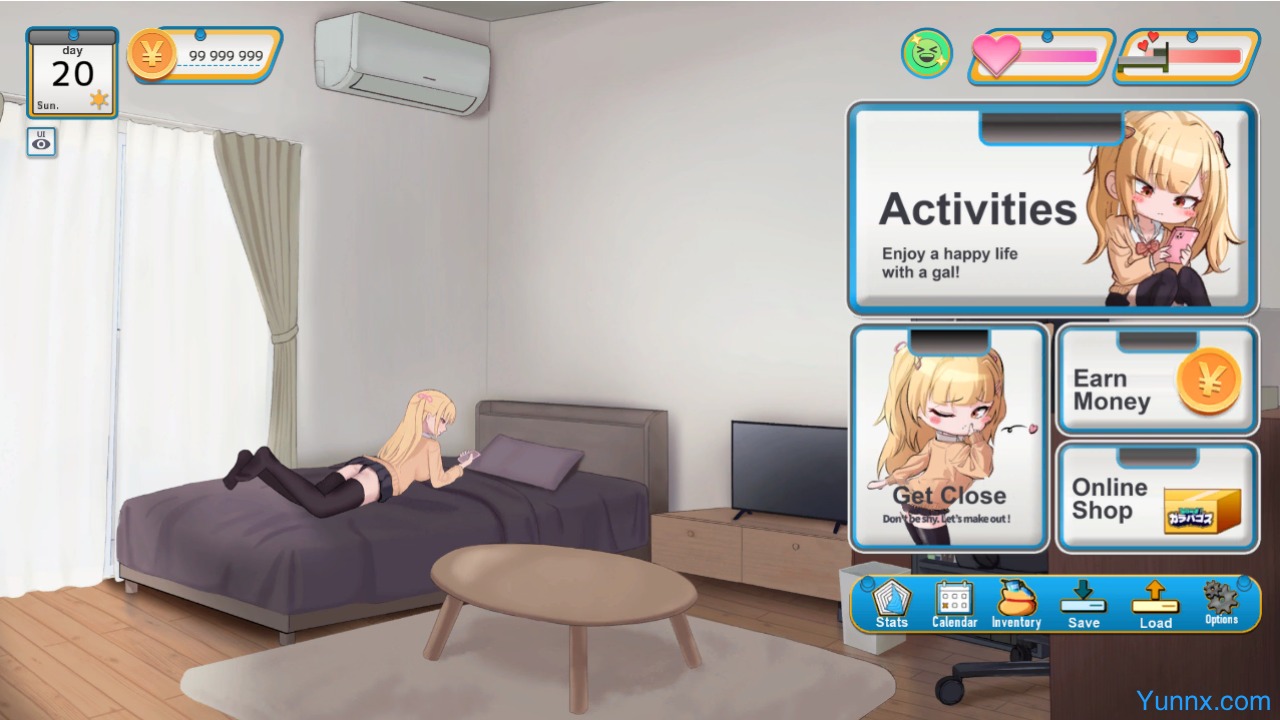
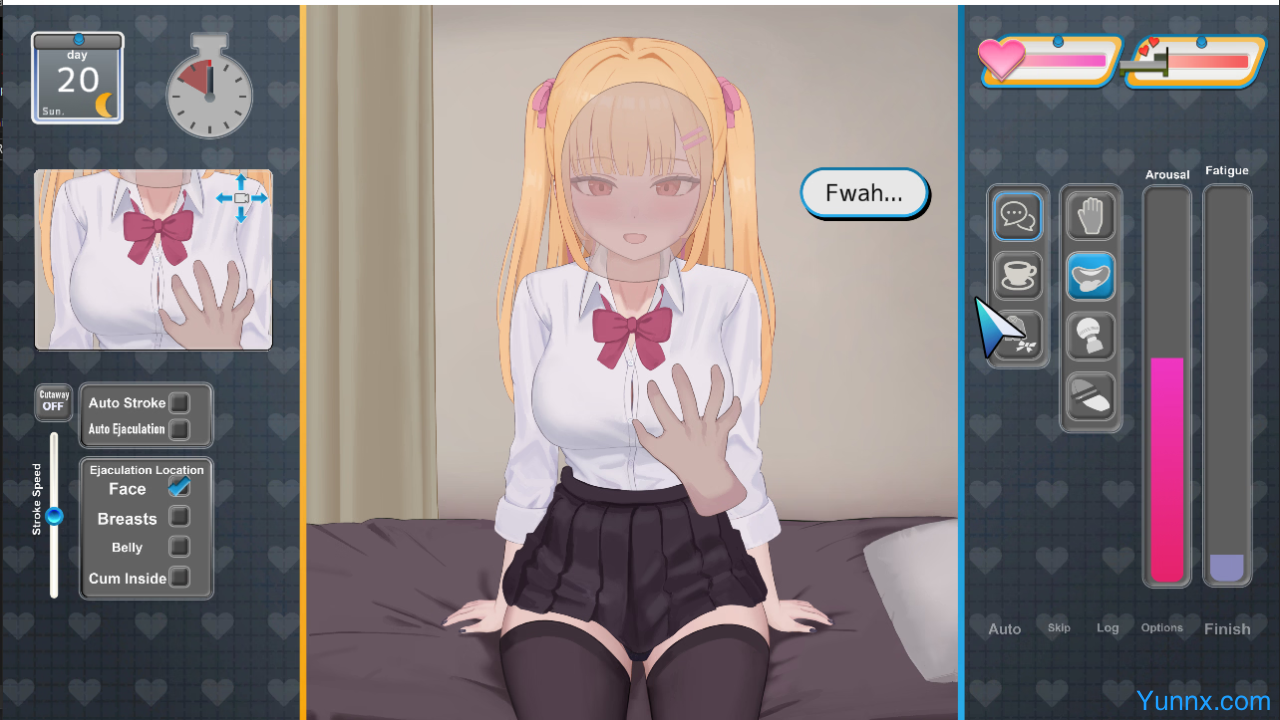
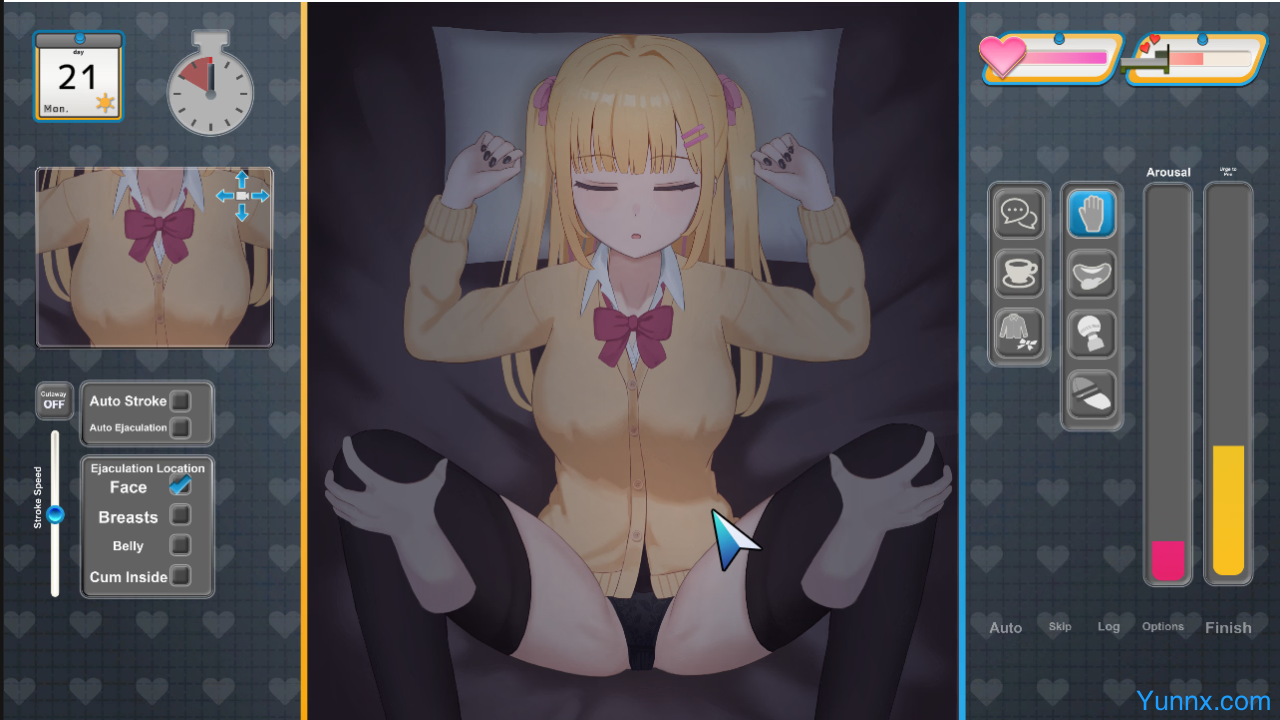
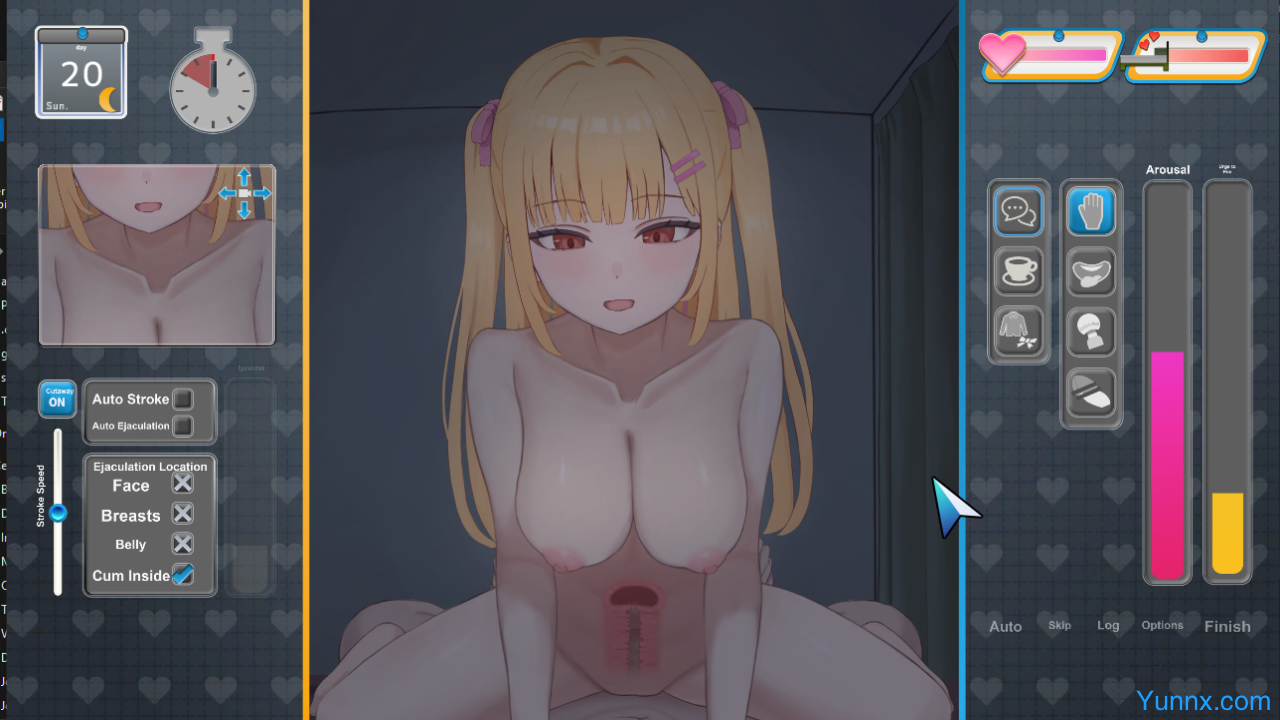

Through a strange turn of events, you take in Rio-chan, a gyaru high school girl with nowhere else to go. What follows is a thirty-day cohabitation with a hard deadline. You balance work, self-improvement, and daily interaction while managing her affection and trust. The ending shifts based on how you spend each day and how deep the bond between you grows. Reach the good ending — or watch her walk away.
LP, Affection, and the Stats That Decide Her Stay
1. Runaway Girl - One Month! runs on multiple intertwined numerical systems, and the most important is LP, your stamina and mood value. Every action consumes it. Bathing restores 30 points, headpats restore 20, coffee refills it completely, and simple conversation scrapes back 15. Early game requires careful budgeting because you cannot afford to waste LP on activities that do not advance the relationship. The system forces you to think about Rio-chan's well-being as a resource you manage, not just a character you talk to.
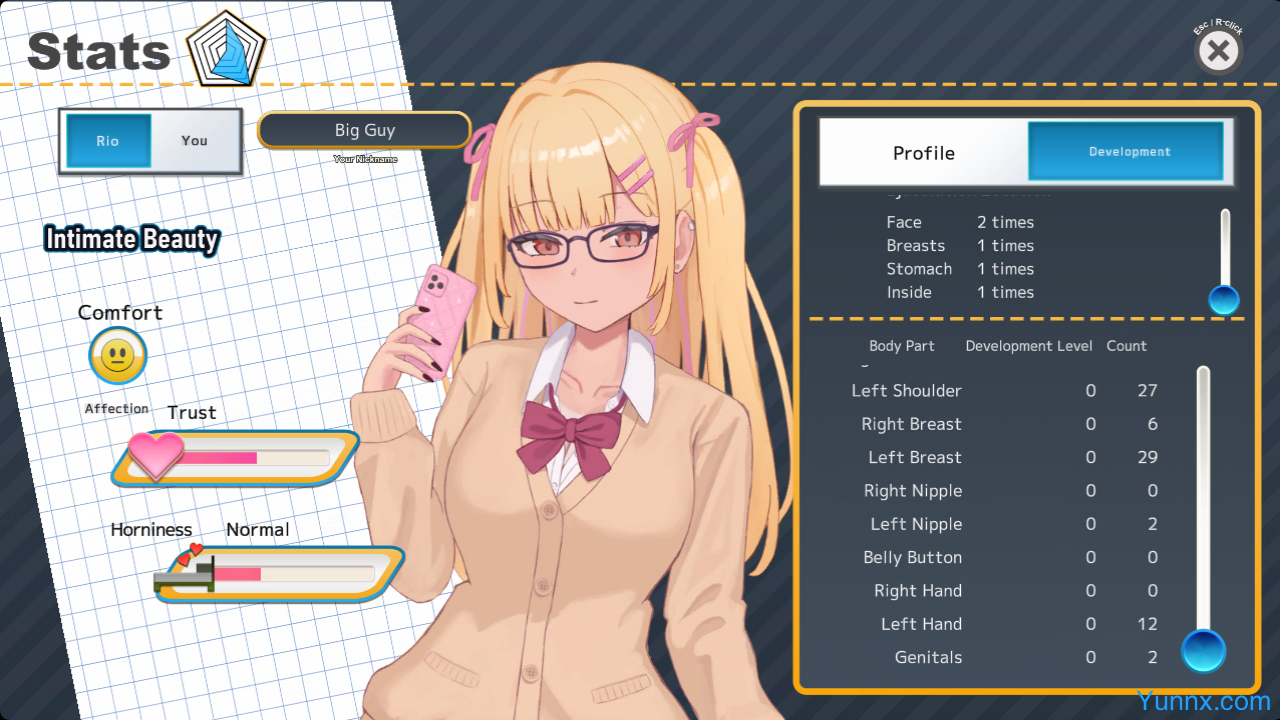
2. Affection is the second pillar, and it is displayed openly on the status screen. Chatting and headpats raise it slowly. Intimate scenes grant a flat increase. The critical threshold is 80 — without reaching it, dating options never unlock, and the relationship cannot progress beyond surface-level cohabitation. Players who treat affection as a secondary concern will find themselves locked out of the game's most meaningful content. The good ending does not happen by accident. It is earned through consistent, deliberate investment.
3. The hidden values are where the system gets cruel. YL, the lewdness stat, is not displayed numerically, but testing confirms that 3.0 is the transformation point where advanced scenes become available. Satisfaction operates on an inverse logic — the lower it drops, the more Rio-chan seeks physical intimacy with you, and keeping it suppressed is required to unlock specific scenes. Two players can spend the same thirty days with the same visible affection score and end up with completely different stories.
The Ten-Day Prologue — Where Most Players Fail
1. The first ten days determine everything. The countdown hangs in the top-right corner of the screen, and ignoring it guarantees a broken save. For the first nine days, the game wants you to do exactly three things: talk, drink tea, and talk again. During conversations, keep asking about Rio-chan's background — those dialogue choices grant bonus affection and LP recovery that you will desperately need later. Players who try to rush physical intimacy during this period will trigger a soft-lock on day 10 with no way to recover.
2. By the end of day 9, your LP must be stacked to 300 or higher. This is not a suggestion. On day 10 morning, Rio-chan announces she is going home. You have two options. Letting her leave triggers an immediate ending. Choosing to go to the train station to pick her up costs 100 LP and opens the main route. Every hour of careful LP management in the prologue exists to afford that single decision. Players who neglected their reserves watch the good ending vanish in a menu selection they cannot take back.
3. After Rio-chan returns, the game opens up dramatically. Activities that cost LP upfront now refill it substantially during the process itself. The restraint you practiced in the prologue stops being a burden and becomes a foundation. The store refreshes with key items on specific visits, including an Advanced Technique Book that grants an additional daily action — a purchase so valuable that skipping it cripples your entire run. The ten-day prologue is not a tutorial. It is the game deciding whether you deserve the next twenty days.
Rio-chan — The Gyaru Who Is More Than Her Archetype
1. Rio-chan arrives as a stereotype and immediately begins complicating it. She is a gyaru — the tanned, flashy, fashion-forward archetype that Japanese media often reduces to shallow aesthetics. But the game uses that surface as misdirection. Her reasons for running away, her guardedness about her past, and the specific ways she responds to kindness reveal someone who built a loud exterior to protect something fragile. The affection system is not just a number. It is the pace at which she decides you are safe.
2. Her arc is about trust, and trust in this game is slow. The early days are filled with polite distance and carefully worded conversations. She tests you. She notices when you push too hard, and she retreats when you do. The game does not reward persistence in the way most dating sims do. It rewards patience. Players who understand that Rio-chan's affection is not a meter to be filled but a door to be unlocked will find a character whose warmth, once earned, feels genuinely earned.
3. The wardrobe system deepens this further. Rio-chan's appearance changes based on your relationship stage and the items you purchase for her. New outfits are not cosmetic rewards — they are signals of how comfortable she has become in your space. The game tracks which version of her you see, and that version reflects the choices you made to get there. A Rio-chan in casual loungewear after two weeks is a different character than a Rio-chan still in her school uniform, and the game knows the difference.