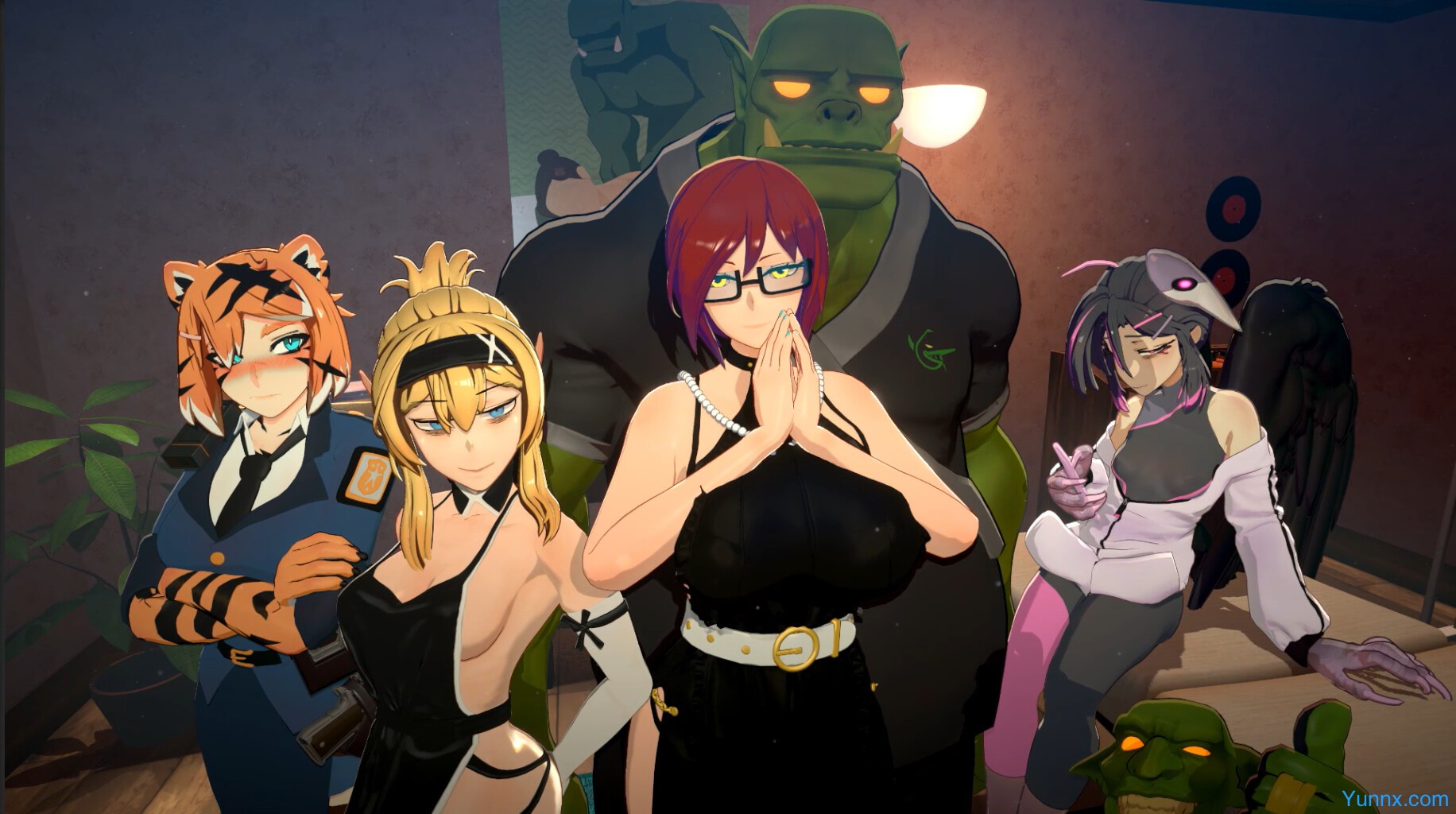




Lunar Mirror: The Pavilion of Desire follows an ordinary college student dumped by his girlfriend and lured into a mysterious masquerade party on the grounds of a remote archaeological school. Players explore the Pavilion's halls, solve environmental puzzles, and pursue nine women through drinking contests, slot machines, and whack-a-mole mini-games. Gather enough favor and the second floor opens — where the truth behind the party and the missing girlfriend awaits.
Cthulhu Horror Meets Campus Seduction
1. The horror is not decorative. Lunar Mirror: The Pavilion of Desire inherits the cosmic dread of its predecessor, where the Cthulhu mythos bleeds into an isolated campus setting. The game opens with a forest sequence that loops indefinitely — the same trees, the same path, the same wooden sign. Only by accepting the mask does the loop break. The game wastes no time establishing that this world runs on rules that make no sense, and the invitation you accepted was never meant to be refused.
2. Developer DSGame explicitly warns that the game contains drugs, alcohol, and non-consensual sex. This is not a warning tacked onto a vanilla experience. The Pavilion operates as a selection process disguised as a celebration, and every woman inside is either a participant, a recruit, or bait. Players who expect a traditional romance will find something far more unsettling: a space where consent is negotiated through intoxication, coercion, and the slow erosion of judgment. The mask is not just a costume. It is the only thing separating you from becoming part of the ritual.
3. What makes the horror effective is the tonal whiplash. Between jump scares and the oppressive forest sequences, players are invited to play drinking games, try their luck at slot machines, and chat up masked women who respond to the right dialogue choices. The game shifts from dread to flirtation to outright explicit content without warning, mirroring the protagonist's own spiral. You are not investigating a mystery. You are descending into one, and the descent feels good — which is precisely what makes it terrifying.
Nine Women, One Pavilion — Seduction Through Mini-Games
1. The Pavilion's halls are populated by nine women, each with her own route, her own dialogue tree, and her own window of opportunity. Small-breasted Ryuka occupies the bar area and challenges you to a three-bottle drinking contest with QTE prompts. The twin-tailed Natsume waits by the stage and responds to a single act of kindness. The bespectacled senior Okuda demands a specific charm before she will speak to you again. Every woman is a puzzle nested inside the larger puzzle of the Pavilion itself.
2. Advancement requires effort. This is not a game where affection accumulates passively. You steal tokens from slot machine players, you scavenge hidden coins behind the whack-a-mole machine, you lose drinking contests on purpose to unlock alternative paths. The guide community has mapped multiple routes for the same character — Ryuka has a safe departure ending, a corruption ending, and a rescue-failure ending, each gated behind specific choices made during and after her drinking game. The game rewards replaying with the knowledge you gained from failing.
3. The explicit content arrives as a payoff for navigation, not as a cutscene triggered by proximity. Eleven animated CG sequences across nine characters, each unlocked through a specific combination of mini-game success, dialogue selection, and item acquisition. The dynamic art style makes every scene feel earned rather than handed over. Players who treat the Pavilion as a gallery will find the doors locked. Players who treat it as a system to be understood will find everything they are looking for and several things they were not prepared for.
Six Endings, One Truth — The Collapse of the Ordinary Student
1. Lunar Mirror: The Pavilion of Desire is not a game about winning. It is a game about discovering how far you are willing to fall before you realize there was never a way out. Six distinct endings await, ranging from the protagonist waking up convinced it was all a dream to a full ritual completion where he becomes a willing sacrifice for "The Mother." The endings do not reward virtue. They reward understanding. The true ending requires all fragments collected, all key women persuaded, and a confrontation with the fact that the protagonist was never the investigator — he was the subject.
2. The fragment system ties directly into the horror narrative. Scattered through the Pavilion are mysterious shards, some purchased from hooded figures, some hidden in storage rooms behind locked doors, some obtainable only by failing a mini-game and accepting a drug in exchange for help. Collecting every fragment and placing them correctly unlocks the ending where the protagonist finally sees the ritual for what it is — and realizes he has been participating in it since the moment he put on the mask. The game's achievement list reads like a descent diary, tracking every step from "accidental wealth" to "becoming a vessel for The Mother."
3. What separates this from its predecessor is the economy of choice. Every mini-game failure, every drug accepted, every woman left behind feeds into a branching system that does not always signpost its consequences. The guide community has documented multiple routes for the same character where the only difference is a single line of dialogue. The protagonist's girlfriend, absent from the Pavilion's public floors, waits at the end of the deepest route — and what happens when you find her depends entirely on how much of yourself you traded away getting there.