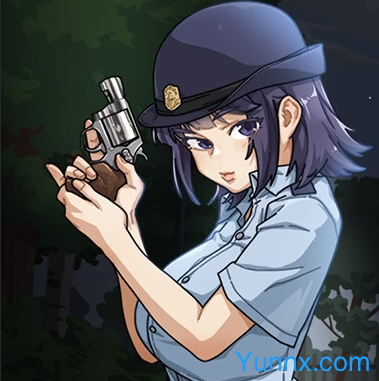

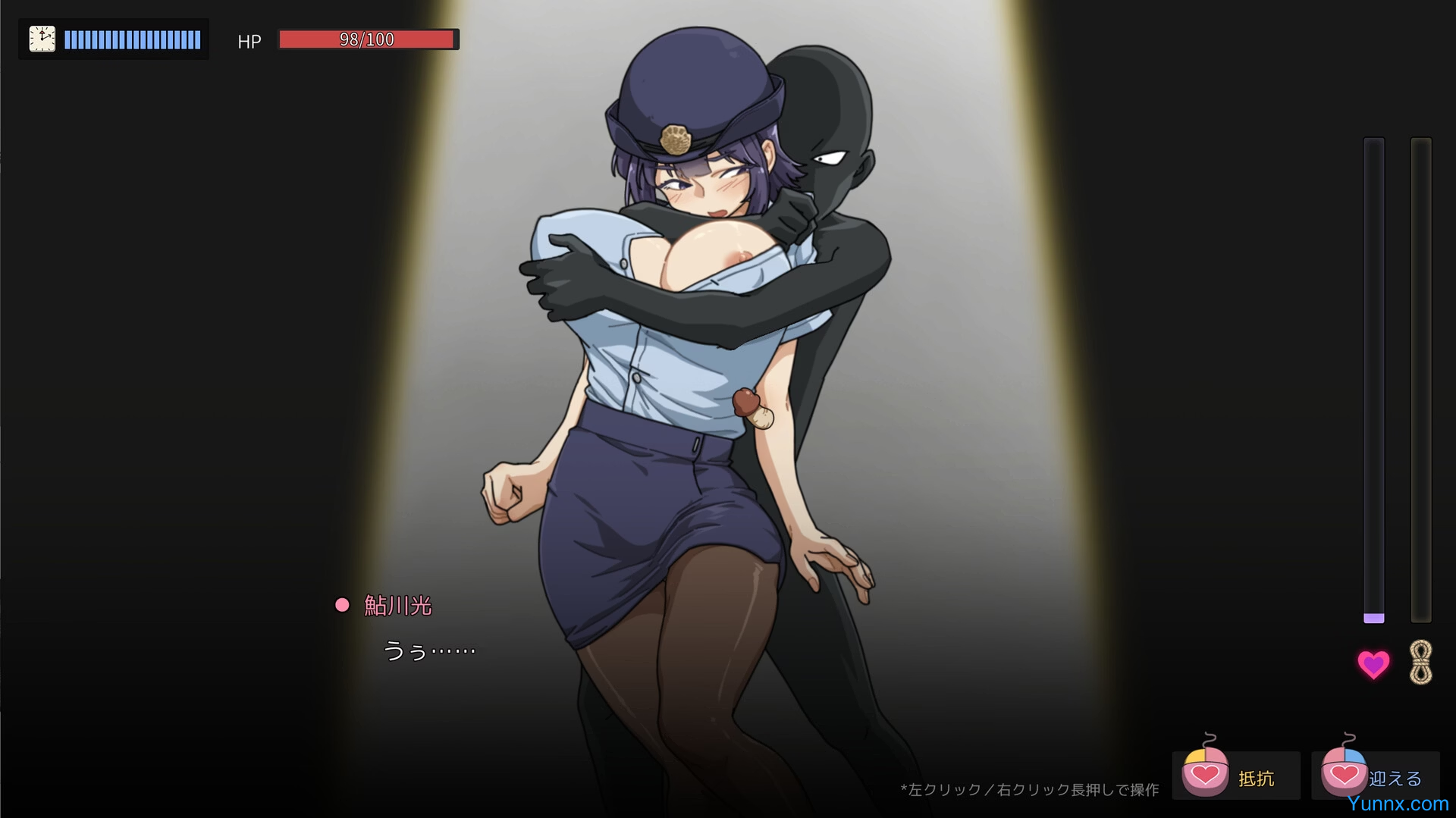
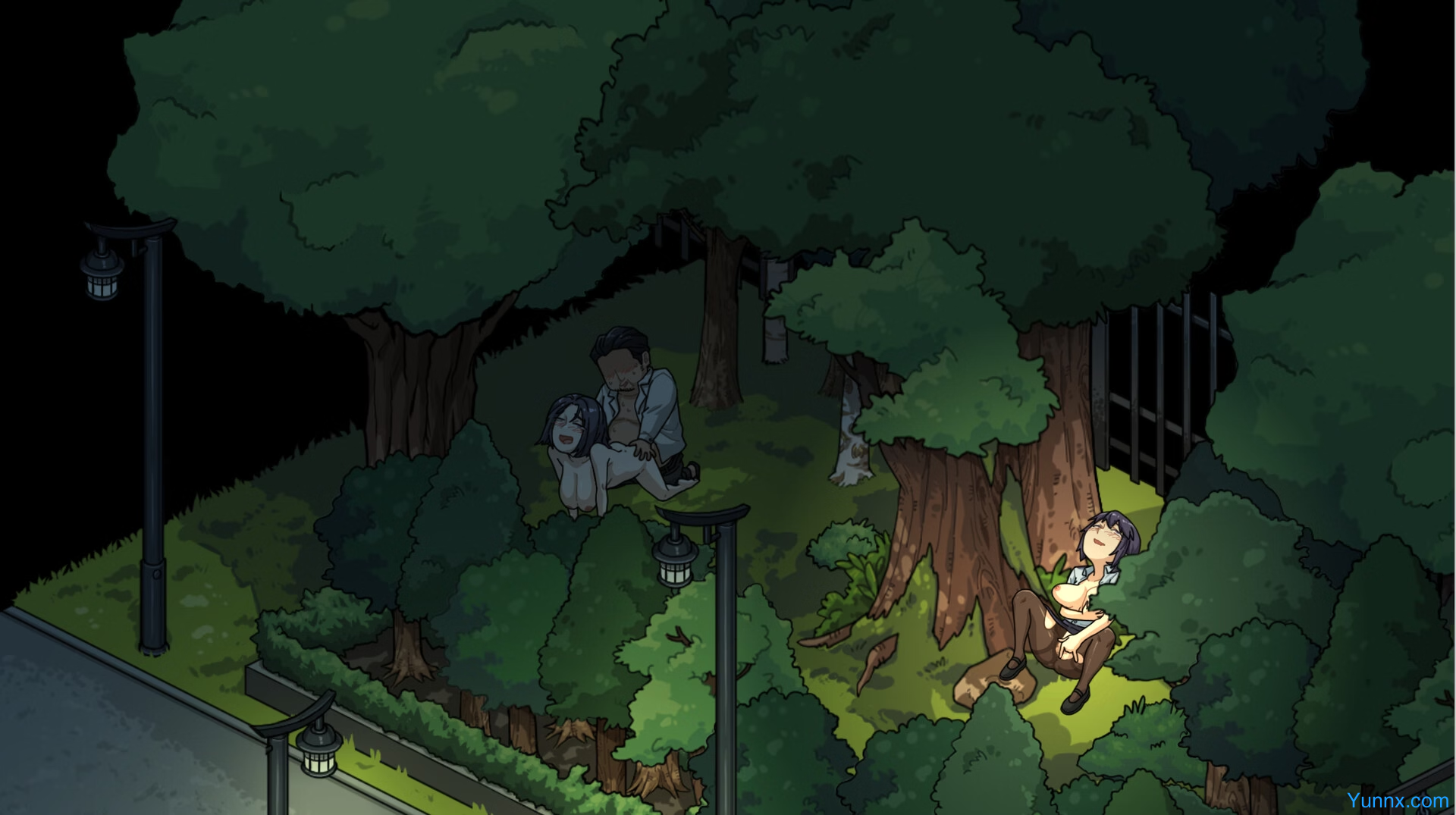
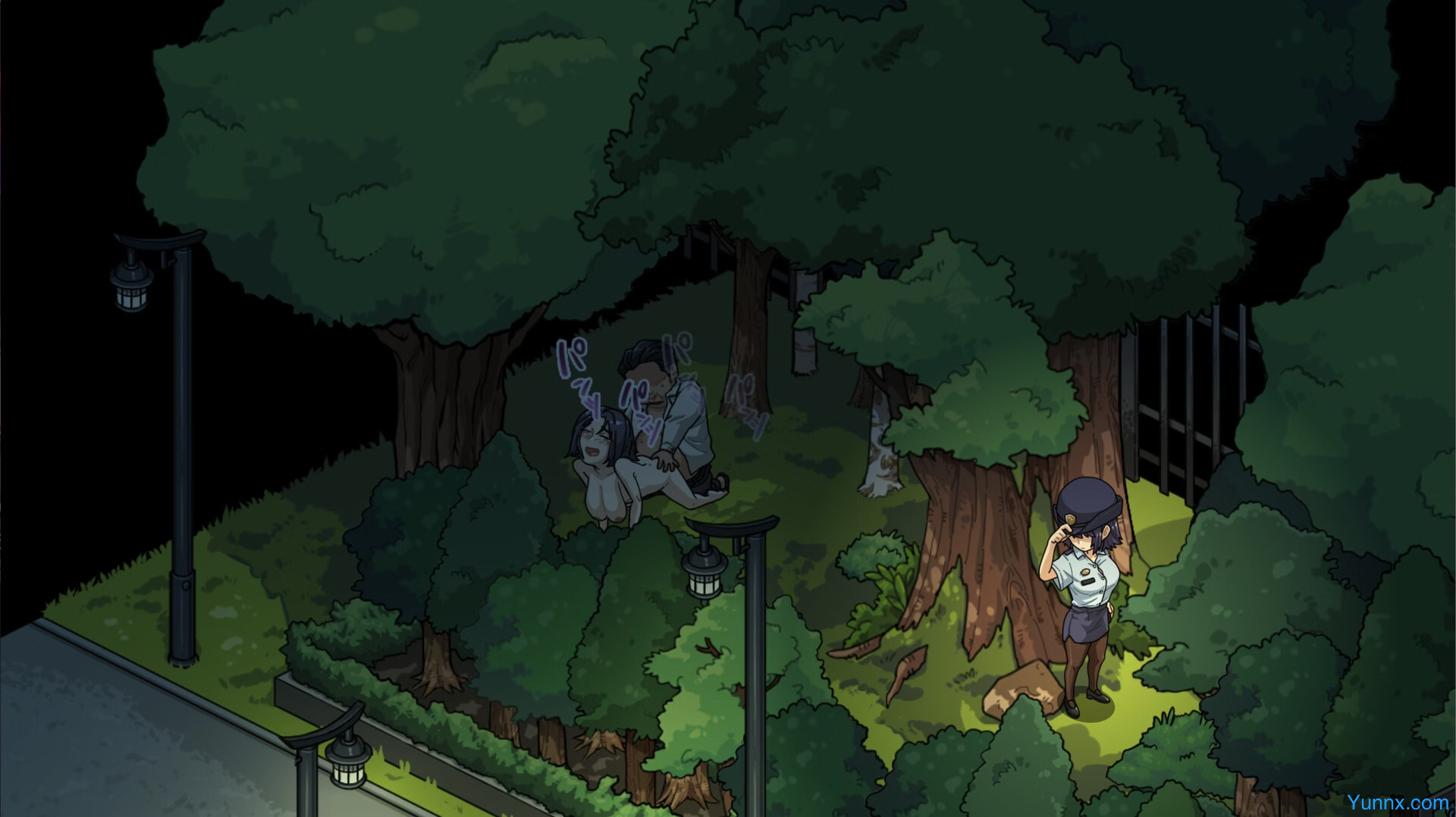
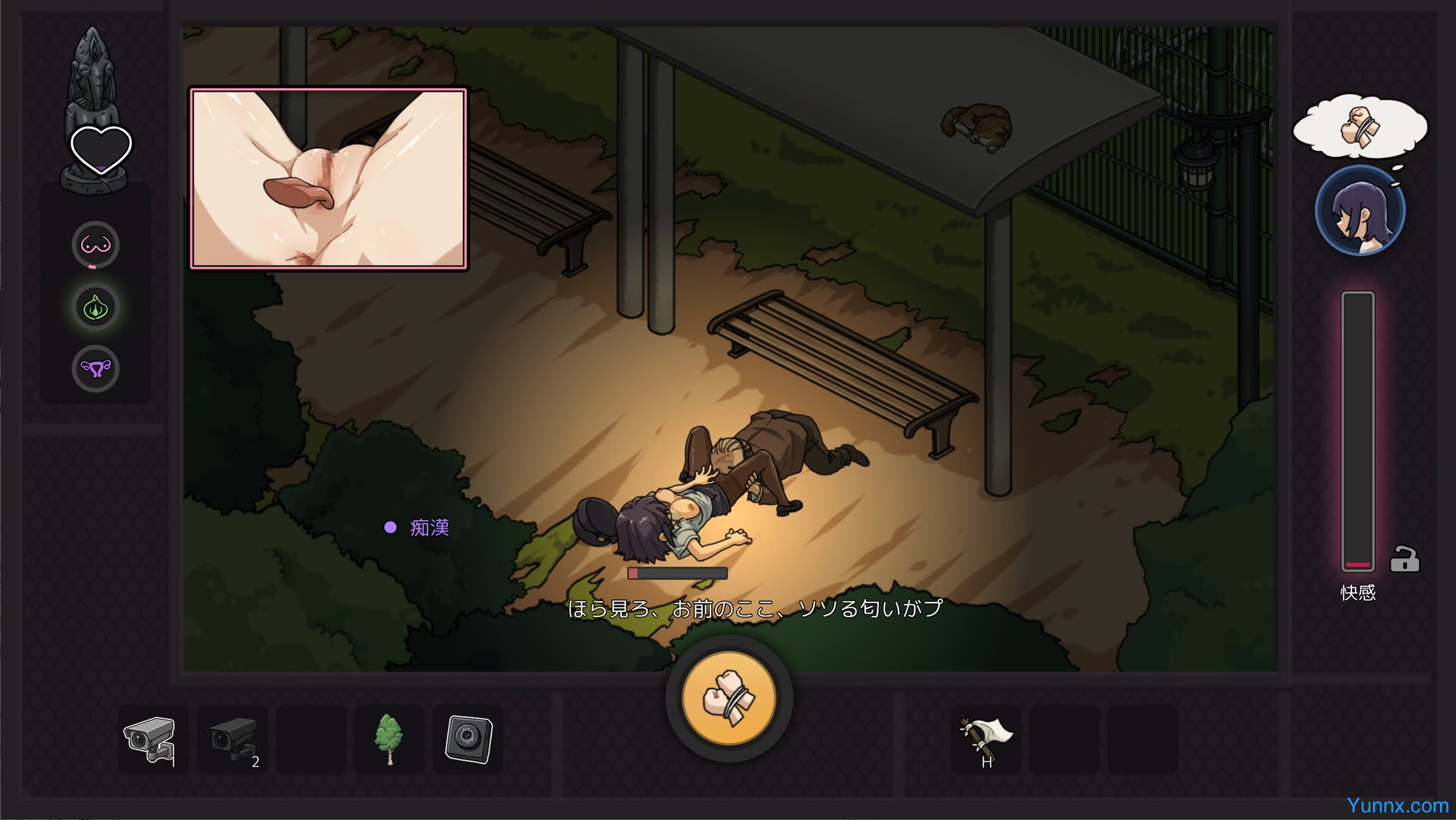
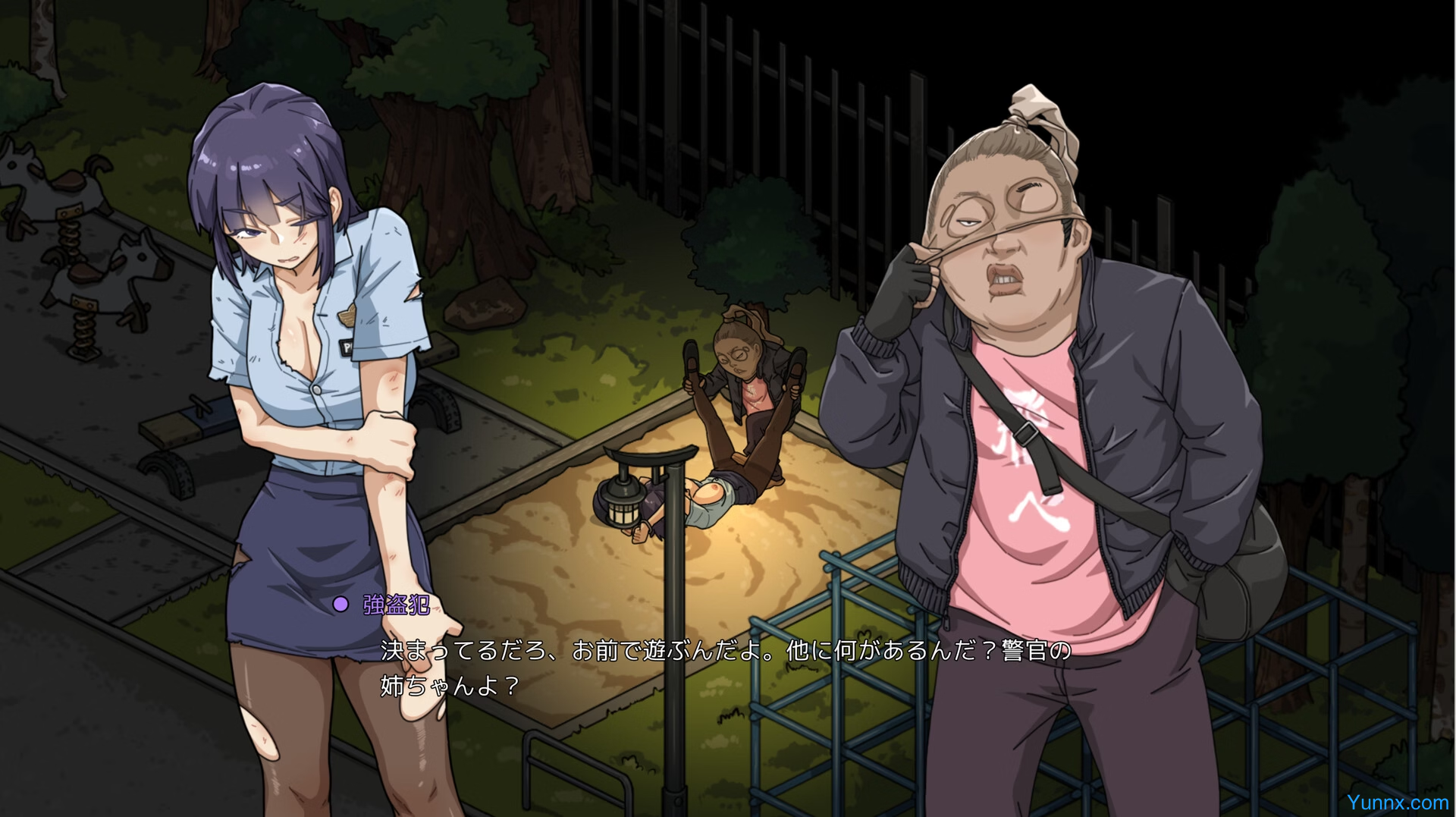
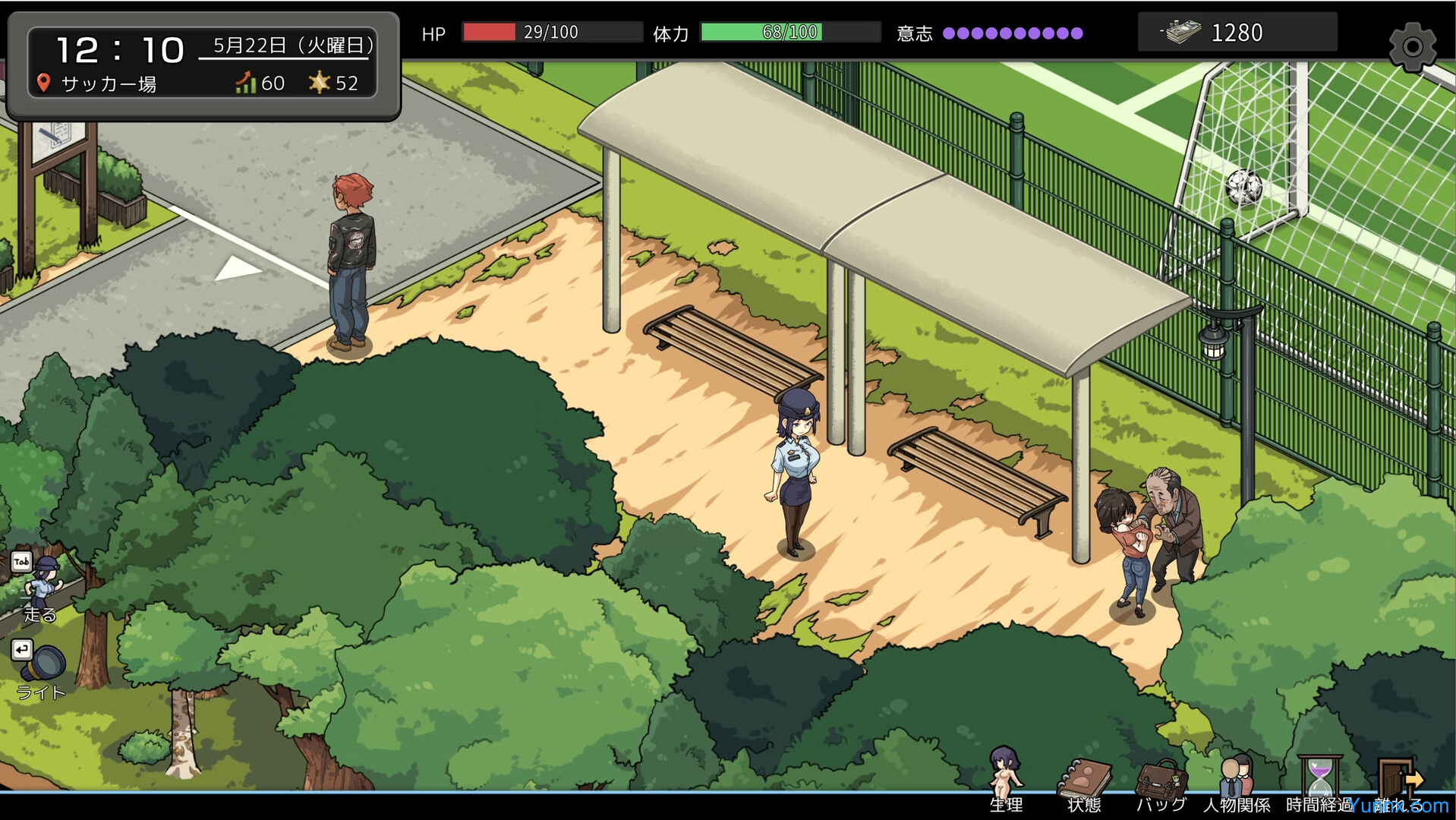
Yakuza Rogue EX: Officer Ayukawa Hikaru is a pixel-art simulation SLG and the latest spin-off in the Yakuza Rogue series, set approximately one year after the events of Shinobi Master: Secret Emotional Conflict Classroom. Players step into the boots of Hikaru Ayukawa, a spirited rookie police officer fresh out of the academy, assigned to the rough-and-tumble streets of Kurumachi for her internship. Manage daily police duties, respond to emergencies, build relationships, and face the constant threat of criminals who see her as nothing more than prey. Every choice shapes her fate—will she rise as a respected officer, or will she surrender to the corruption that surrounds her? With a 30-day time limit, branching narratives, and a world where danger lurks around every corner, this game delivers a high-stakes urban police simulation with unmistakable adult undertones.
Gameplay & Police Simulation Mechanics
1. At its core, Yakuza Rogue EX is a high-freedom urban police simulation that blends time management, case investigation, and response. Players control Hikaru as she navigates the complex streets of Kurumachi, handling everything from routine patrols to dangerous criminal encounters. The game features a 30-day internship period, during which players must balance police work, physical training, relationship building, and personal survival. Each day presents new opportunities and threats, and how you allocate your time directly impacts Hikaru's development and the story's direction.
2. Combat in the game relies on a QTE (Quick Time Event) system that demands precise timing and reflexes. Players must master the rhythm of these prompts—waiting for the right moment to strike for a "GOOD" or "Perfect" rating, which determines how much stamina is recovered and what rewards are earned. For players who find repeated QTE sequences exhausting, the game offers an auto-dodge feature for standard enemies, though this only provides "GOOD" evasion without the bonus of a "Perfect" rating. Boss battles, however, require full player engagement and strategic thinking.
3. The game world is vast and interconnected, featuring a pixel-art map that spans police stations, shopping districts, slums, jungles, and night bus stops. Each location hides treasure chests, random events, and key NPCs who can alter Hikaru's path. Exploration is rewarded with new items, skill points, and story triggers. Players can also engage in side activities like fishing, arm-wrestling training, and gift-giving to NPCs, all of which feed into the game's progression systems. The game supports and features full voice acting for Hikaru and major NPCs, adding depth to every interaction.
Character Interactions & Relationship System
1. The game features a rich cast of characters, each with their own schedules, personalities, and storylines. Key NPCs include Seto Mika, a woman who appears at the park entrance at night and can be befriended through gift-giving, eventually leading to intimate scenes at her home. Yumiko, a woman who appears at the soccer field every morning, can be saved from harassment—and depending on your choices, you may end up caught in the chaos alongside her. Other characters include police station chief Takakura Hayato, criminal, and various antagonists who appear in different districts at specific times.
2. Relationship progression is driven by a combination of gift-giving actions, and dialogue choices. Each character has a affection system that unlocks new scenes and story branches as it increases. For example, gifting items to Seto Mika raises her affection, eventually allowing access to her home at night where players can witness or participate in increasingly explicit scenarios. Similarly, building rapport with Yumiko's husband after certain events opens additional intimate possibilities. The game includes a comprehensive CG collection and scene replay, added in version 1.1.3, allowing players to revisit unlocked adult content.
3. The game also features a prostitution and sex work mechanic tied to certain characters and locations. For instance, after events with Kozuka China in the West District restroom, Hikaru can engage in restroom prostitution These elements are integrated into the gameplay loop rather than feeling like detached side content, with each encounter carrying consequences for Hikaru's reputation, stats, and story progression. The game's content includes pixel-art H-scenes, large-format CG scenes, and a variety of positions and scenarios involving multiple partners.
Dual Paths: Justice vs. Corruption
1. One of the game's most distinctive features is its dual-branch narrative design, where Hikaru's fate is determined by the cumulative weight of player choices. Will you train her rigorously, solve cases diligently, and uphold the law—molding her into a respected police officer? Or will you yield to temptation, exploit her vulnerabilities, and guide her down a path of sexual corruption and moral decay? The game tracks every decision, from how you respond to criminal encounters to whom you choose to trust and how you manage Hikaru's physical and emotional state.
2. The branching system is not binary but exists on a spectrum. Players can pursue a "pure" route, a "corruption" route, or something in between, with multiple endings reflecting the nuances of Hikaru's journey. The game's subtitle—The Crossroads Where a Virgin Turns into a Pervert—hints at the transformative nature of this choice-driven narrative. Early-game decisions, such as whether to accept help from dubious characters or how to handle sexual advances from criminals, set the tone for the rest of the 30-day internship.
3. The game encourages multiple playthroughs to experience all the branching paths and endings. However, the New Game+ system has received mixed feedback—while version 1.1.1 introduced full stat and ability inheritance for second playthroughs, later updates added the ability to manually select which aspects to carry over. Players are advised to save at key junctures (around Day 10) to explore different event chains without restarting from scratch. The game also includes a "sprint mode" in New Game+ that significantly increases movement speed, streamlining subsequent runs.