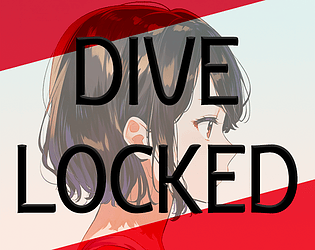
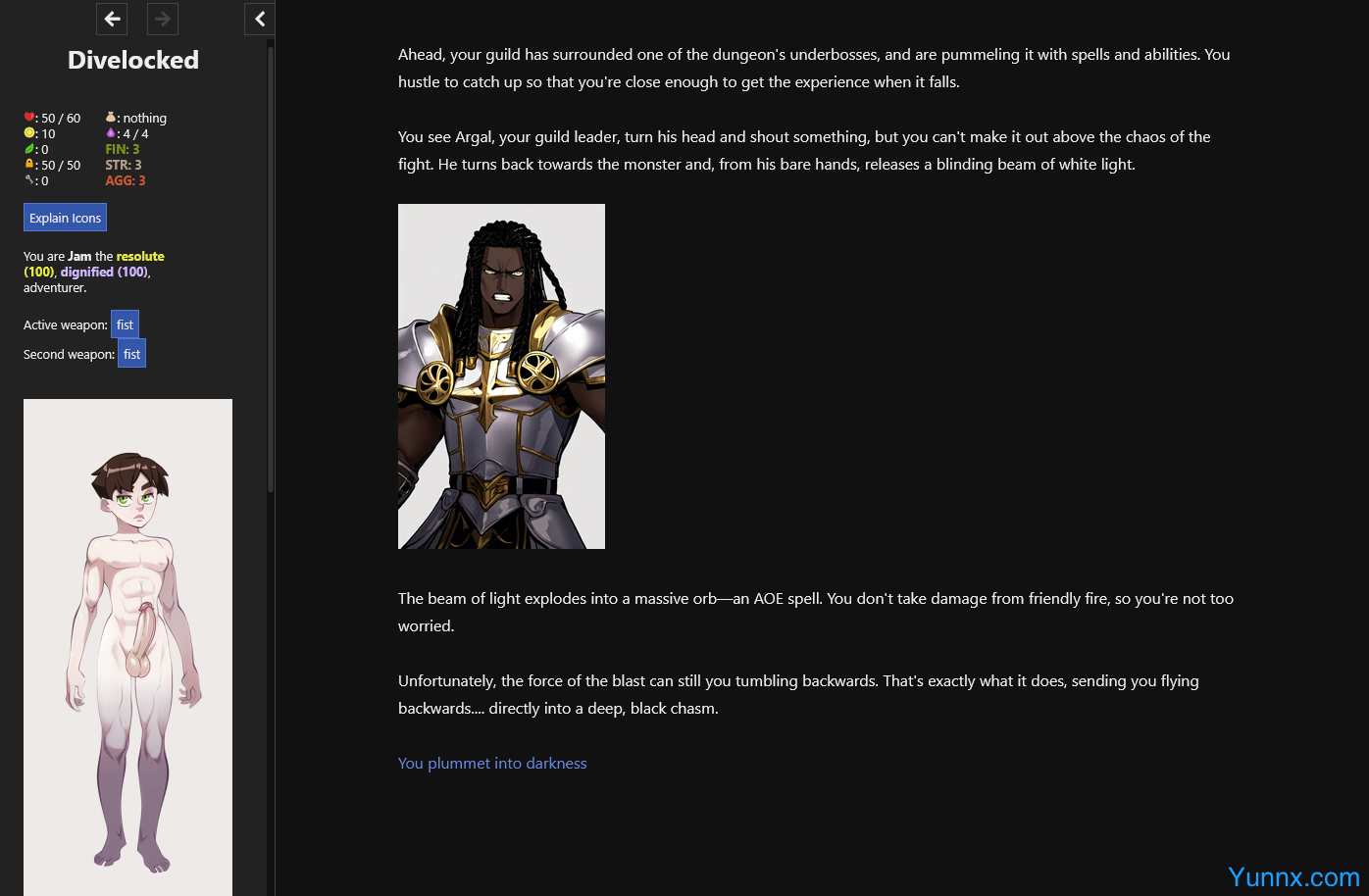
You logged in for a raid. Standard full-immersion VR session, party of five, tank leading the way — and then the dungeon's routing logic bricked, your guild got split by a collapsing corridor, and suddenly you're the only one still wired in with no logout prompt, no admin override, and no idea which way the exit was. Divelocked puts you in the armor of that guy: alone, undergeared for where you've ended up, and realizing fast that the dungeon's mobs aren't just trying to kill you. They're trying to remake you. Every trap, every curse, every encounter that should've just ended you instead leaves a mark that goes deeper than HP — and the longer you stay, the more the environment itself starts treating you like something that belongs to it. Your job isn't to clear the floor. It's to get out with your body — and your sense of self — still recognizable.
The Dungeon Doesn't Want You Dead — It Wants You Remade
1. The central tension is baked right into the systems: this is a semi-roguelike descent where failure states aren't always game-over screens. Sometimes failure is a binding. A curse. A lingering stat-change or item-equip that won't come off without the right ritual, and that starts shifting your silhouette, your posture, the way NPCs and monsters read you. The dungeon is built on a logic where everything is a vector for transformation — mobs, trapped clothing passages, cursed outfits that sabotage your stats while making you "more interesting" to what's hunting you, and encounters that escalate from "get out of my way" to "wait, why am I hesitating?"
2. Right now the transformation pipeline is MtF / involuntary feminization-focused — meaning the pressure isn't just "take damage or die," it's a slow architectural grind on your character's presentation and resistance. Makeup traps. Hair-length alterations. Outfits whose curse mechanics actively work against your willpower while boosting how much attention you draw. The game is honest about the hierarchy of its kinks — physical transformation, humiliation, and bondage sit at the top of the encounter table and fire the most frequently, with chastity, latex/rubber, crossdressing, and impact play layered throughout the crawl.
3. What keeps it from feeling like a slideshow is that you can fight back — or at least manage the slide. Willpower-equivalent checks, struggle mechanics on bondage situations (some restraints are "un-strugglable" without outside intervention or a merciful captor), curse-breaking rituals, and the simple math of staying armored enough that monsters read you as a threat instead of prey. The 2.x overhaul even added Hex Sense checks and a Reservoir of Witchcraft skill path so you're not just watching your stats erode — you've got actual counters if you spec into them.
Systems That Actually Matter — Skill Trees, Outfit Stats, and "Why Your Gear Is Trying to Kill You"
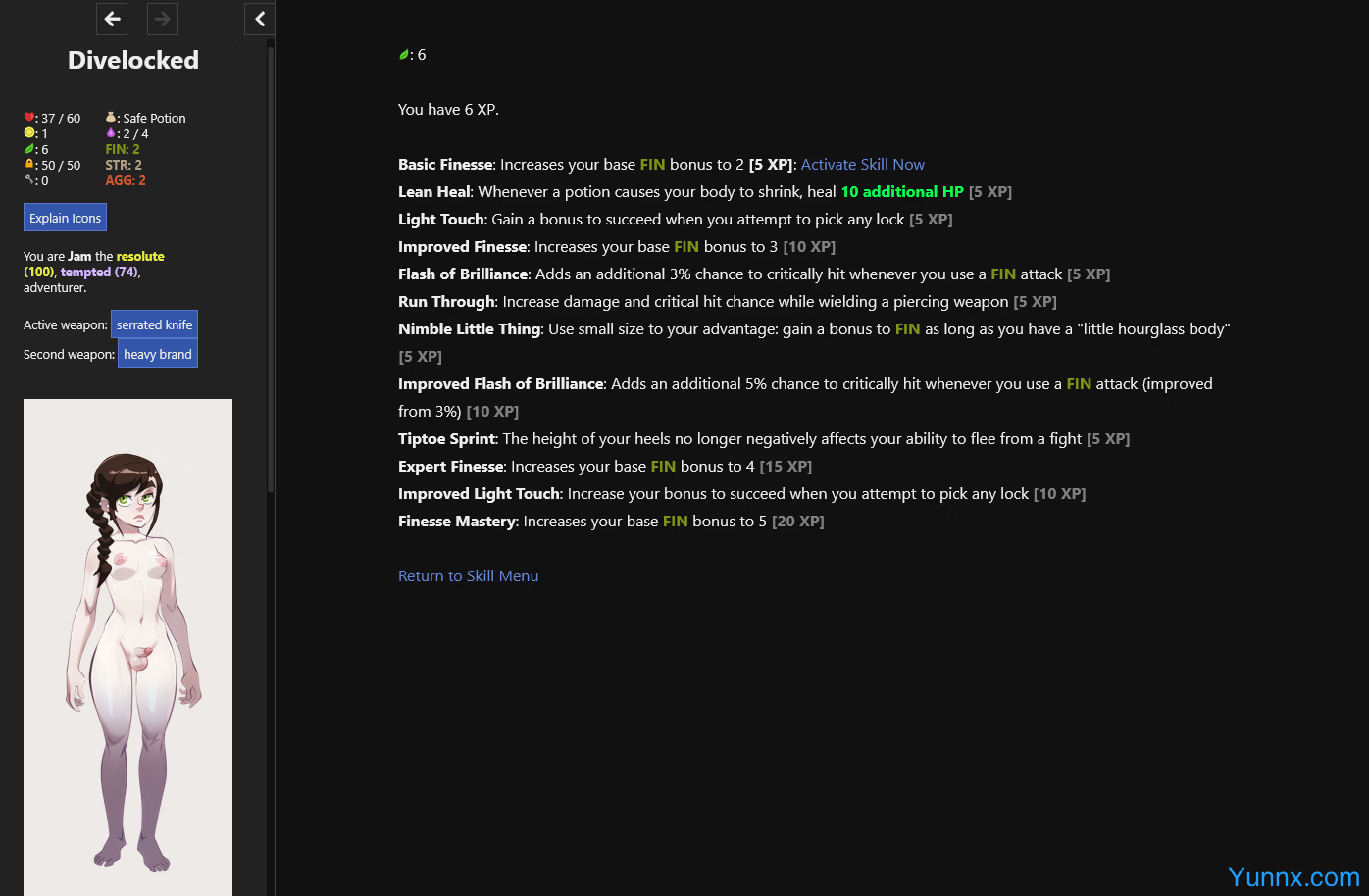
1. The progression fix in v1.04 / the 2.x rebuild solved the old problem where runs lived or died entirely on whether RNG blessed you with a heroic-rarity weapon. There's now a proper Skill Tree — gradual, linear, choice-driven — so every failed escape still feeds XP into permanent upgrades. You pick how you want to scale: raw survivability, curse resistance, ritual unlocks, or the "Bloodymindedness" brute-force path that makes you harder to pin down. It turns the game from pure dice-roll frustration into something you can steer.
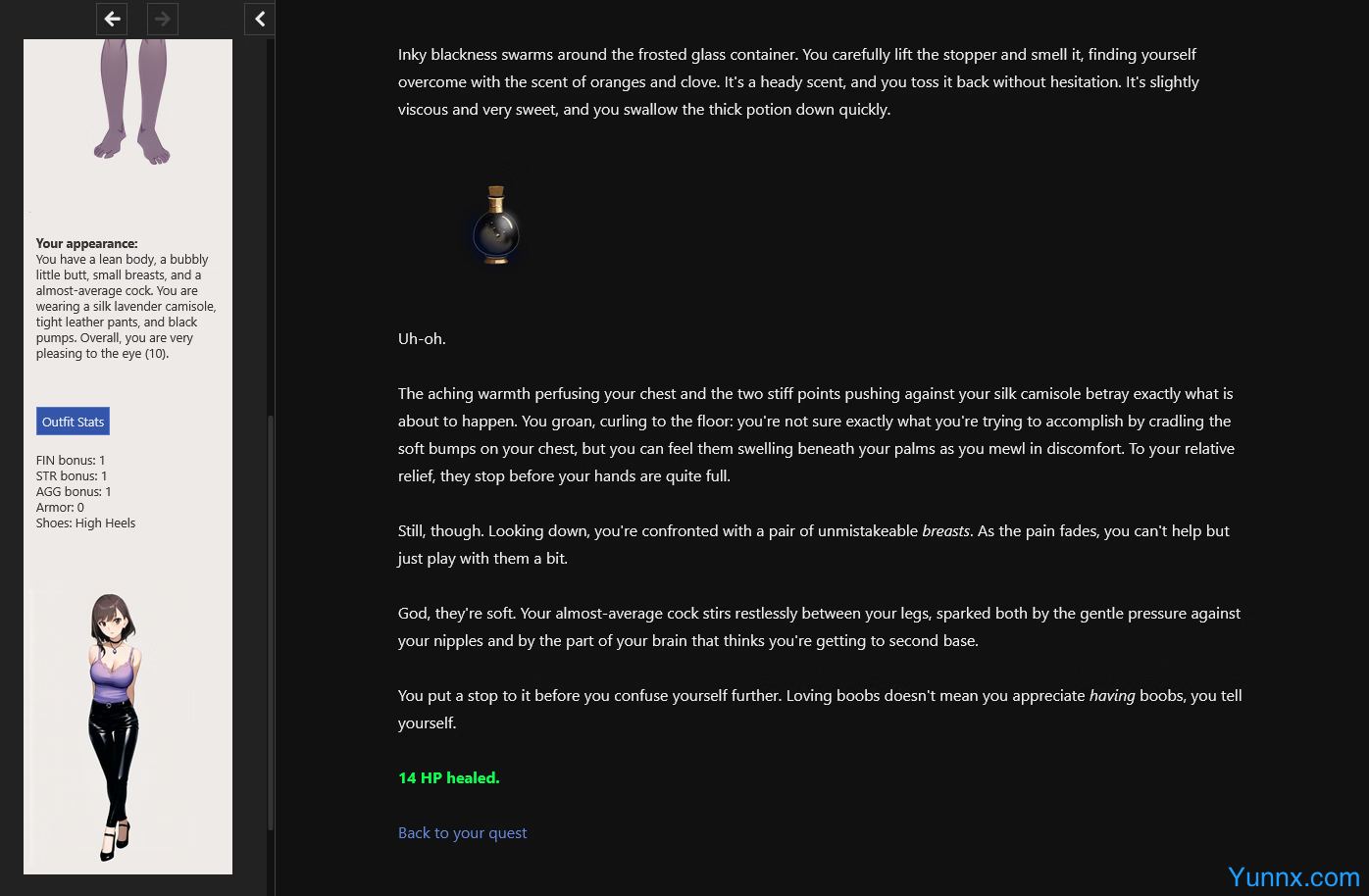
2. Equipment isn't just stat shopping. Outfits carry intent. Sexy clothes amplify how attractive you appear to monsters — changing encounter behavior, aggression patterns, and what kind of "attention" you get — while actual armor plates you up and mutes that signal. All cursed outfits currently share the same penalty profile (bad stats, but they stay on you), and the sidebar UI now shows outfit stats outright with clickable tooltips so you know exactly what a piece is doing before you jam it on. The non-sexy protective layers are there for a reason: wear them while you're still trying to escape, swap at your own risk.
3. Combat itself got rebuilt in the 2.x code pass — still Twine/Sugarcube text-driven (this isn't an action game), but the underlying system now handles group battles (PC vs. multiple enemies), custom interaction hooks, and faction-specific content like the newer kobold slaver faction with ponygirl-training encounters, plus recurring antagonists like Famil the witch and Pinky the demon. The 1000+ passage count means the crawl stays variably nasty — you're not cycling through six copy-paste rooms hoping for a drop.
Versions, Performance, and What "Active Development" Actually Looks Like Here
1. Engine / platform: Pure HTML5 — Twine/Sugarcube — so it runs in browser or as a local HTML package on Windows without a launcher, install, or compatibility headache. That's the upside of the Twine base: lightweight, portable, and your "save" is a file you can actually find. Current build is v2.1.2 (Dec 2025), which was a full tear-down rebuild by a revived contributor team after a dev hiatus — complete code overhaul, visual refresh on the player avatar text presentation, and customizable appearance (skin tone, eye color, hair color, hairstyle switches).
2. Heads-up on saves: the 2.x transition broke backward compatibility. The dev is upfront that this is a casual project run on a learning curve, so hotfixes may still nuke saves between sub-versions — standard practice is don't get attached to one file, treat each version as its own snapshot. The upside is the rebuild gave them proper tooling to keep expanding without the old "spaghetti code" bottle-neck they'd crossed the 1000-passage mark on.
3. Roadmap-wise: customizable avatar is already partially there (hair/makeup/eye/skin), and the oft-requested "start as a girl" / broader origin options are cited as in-development. Until then, the identity anchor of the game is very specifically the guy-getting-reshaped angle — the dissonance between who you logged in as and what the dungeon's decided you're becoming, and whether escaping means reversing it all or just… learning to walk differently.