




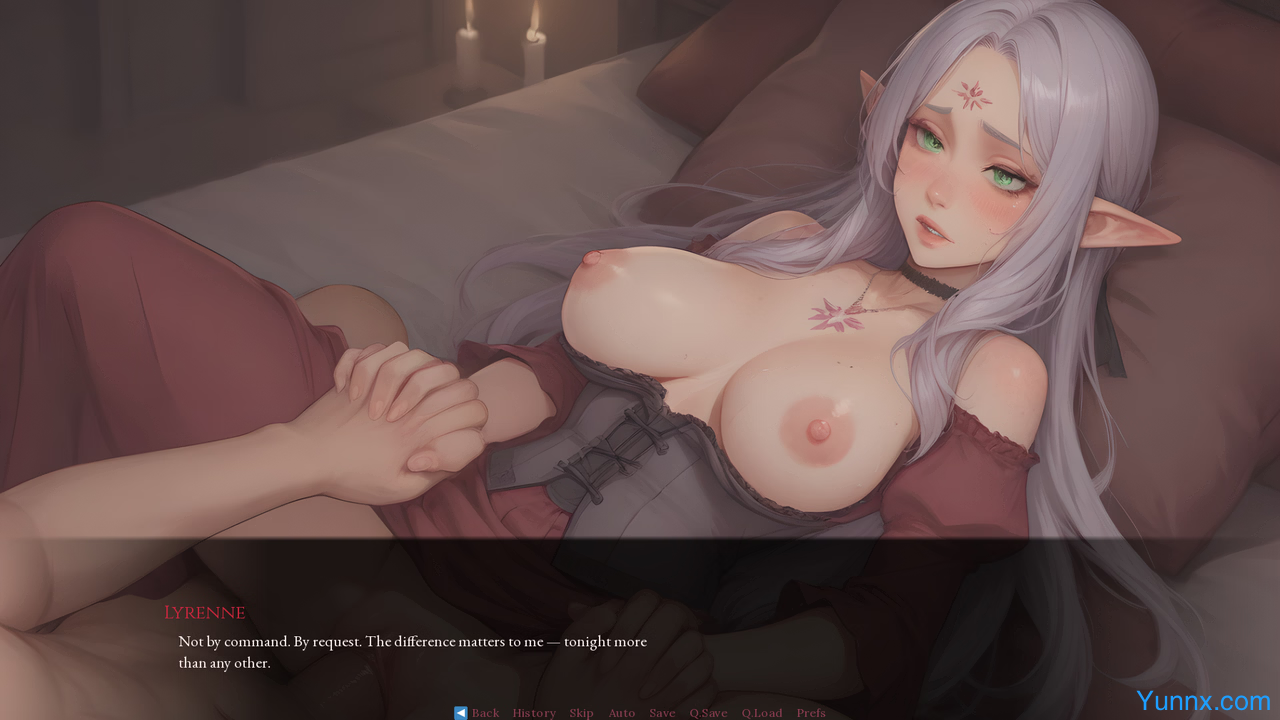

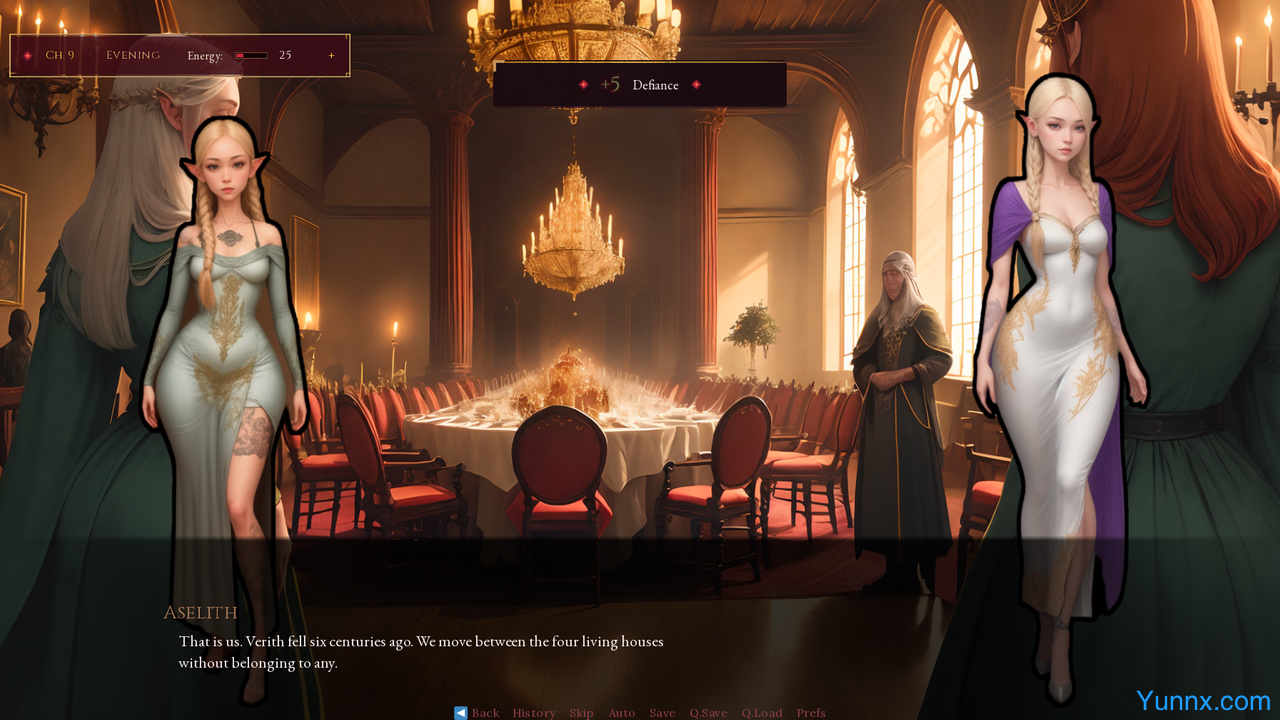
Hunted, captured, and sold. In Chains of the Forest, you are not a hero, but a possession. Purchased by the ancient elven noble Lyrenne Veyrwald, you must navigate a decadent and deadly court where every smile hides a scheme. Your survival depends on learning to manipulate a web of thirty-two characters, or becoming a pawn in their eternal games. This is a deep narrative of intrigue, identity, and long-term strategy, not a simple power fantasy.
A World of Knives and Whispers
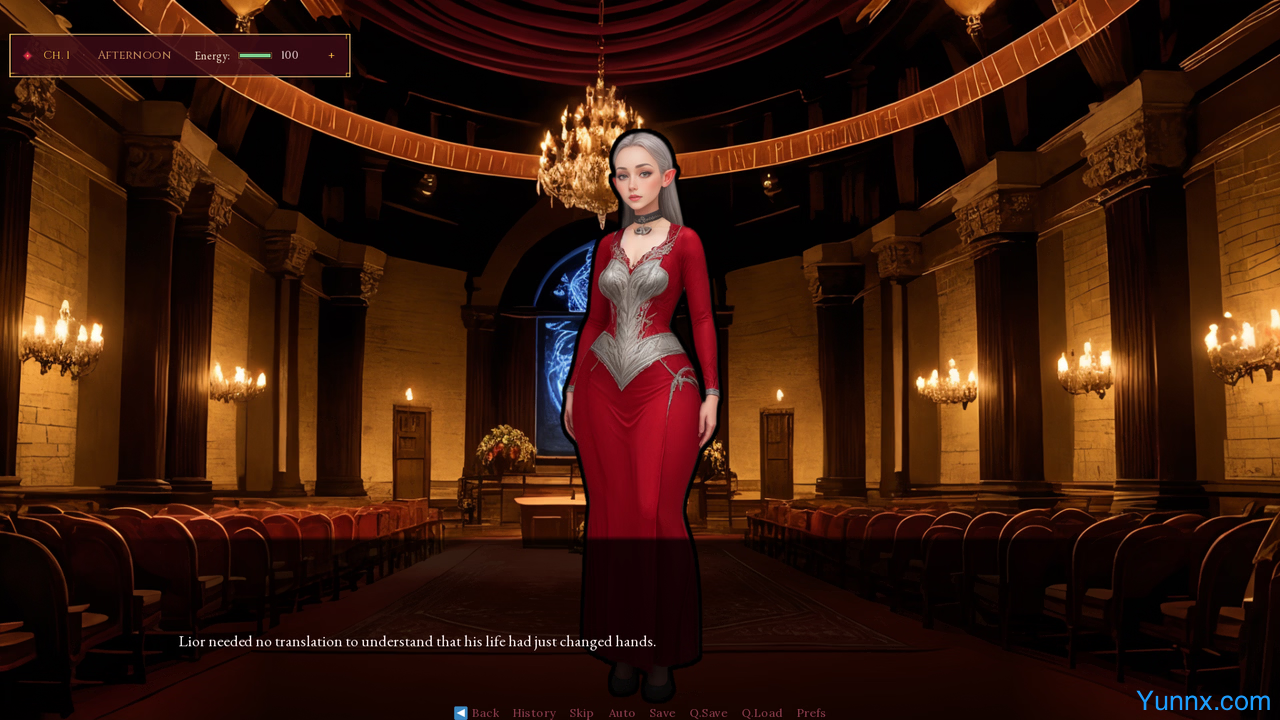
1. The forest that claimed you was only the beginning. You awaken in the opulent, chilling reality of the elven auction hall, a piece of property among many. Here, the rules are unwritten, alliances are fluid, and trust is the quickest path to an early grave. Your new world is one of ancient grudges and subtle power plays, where a wrong glance can be as fatal as a dagger.
2. The game’s core is a complex social engine. You are surrounded by a full cast of thirty-two characters, from rival nobles and jealous slaves to spymasters and forgotten heirs. Each has their own ambitions, secrets, and evolving agendas. Progress is not about brute strength, but about conversation, observation, and leveraging the hidden tensions between others to create opportunities for yourself.
3. There is no single path to victory. Your actions—and inactions—ripple through the court. A kindness shown to a servant might be reported as weakness, while a clever insult could earn you a dangerous enemy or a wary ally. You must constantly read the room, plant rumors, and broker deals, understanding that today's tool could be tomorrow's master—or executioner.
The Gilded Cage of House Veyrwald
1. Your owner, Lyrenne Veyrwald, is a force of nature. She presides over one of the oldest elven houses, a lineage so long it has slaves older than human kingdoms. Her interest in you is personal, obsessive, and tied to a centuries-old wound: you share the face of her long-dead brother. To her, you are a ghost, a toy, and an experiment all at once.
2. Your existence in House Veyrwald hangs in a delicate balance. Lyrenne intends to mark, train, and observe you closely. Your journey is a protracted audition for roles you never applied for: will you become her cherished favorite, a trusted tool wielded against her foes, or the catalyst for her ultimate ruin? This looming decision colors every interaction within the manor's walls.
3. The house itself is a character. Its halls are filled with relics of forgotten ages and slaves who have seen empires fall. Learning its history, its secret passages, and the loyalties of those who serve within it is crucial. Power here is not just about influence over Lyrenne, but about understanding the very foundation upon which her—and now your—world is built.
Beyond the Auction Block: Gameplay and Consequence
1. This is a narrative-focused experience designed for multiple playthroughs. Choices are rarely binary and often have delayed consequences. A decision in your first week may not reveal its true impact until seasons later, mimicking the patient, unfolding nature of a true long con. The game tracks relationships, reputations, and secrets on a granular level.
2. Player agency comes from strategic thinking, not combat. Gameplay revolves around managing your daily schedule, choosing whom to speak with, what skills to practice (etiquette, linguistics, memory), and what information to trade. You might spend a morning deciphering old letters to uncover blackmail material, and an afternoon subtly turning two allies against each other.
3. The ultimate goal is to gain a measure of control in a world designed to keep you powerless. Whether you seek to earn your freedom, seize power for yourself, or unravel the mysteries of the Veyrwald bloodline, you must play the game better than anyone else. Remember: in this forest of intrigue, you were the prey. Now, you must learn to be the hunter, or remain forever in chains.