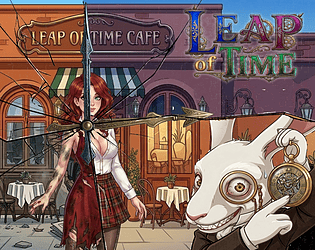



In Leap of Time, a time-traveling rabbit gifts you the power to relive and alter pivotal moments from your past, but as you exploit this ability, you'll uncover the butterfly effects of changing history and confront the consequences of your newfound power in this adult time-travel simulation RPG.
Manipulating Memories and Consequences
1. The "Leap of Time" mechanism allows you to pinpoint and redo specific memories, but each jump creates a branching timeline, leading to multiple parallel universes with unique outcomes. Your decisions—whether to correct past regrets, exploit opportunities, or indulge in forbidden fantasies—directly shape these divergent realities, creating a complex web of cause and effect that you must navigate.
2. As you jump between timelines, you'll encounter alternate versions of characters from your life, each reflecting the consequences of your previous choices. These variations can range from subtly different personality traits to entirely new circumstances, such as a former acquaintance now being a romantic interest or a past adversary becoming an ally, forcing you to adapt your strategies and relationships on the fly.
3. The game tracks your "Temporal Resonance," a measure of how harmoniously your actions align across different timelines. High resonance indicates a coherent, stable narrative thread, while low resonance triggers chaotic events and unpredictable character behaviors, making each subsequent leap more challenging and potentially rewarding as you balance exploiting new possibilities with maintaining narrative integrity.
Relationship Dynamics and Sexual Exploitation
1. Your romantic and sexual encounters are deeply intertwined with the time-travel mechanic. By revisiting past moments, you can alter the course of relationships, turning missed opportunities into passionate trysts or recontextualizing past rejections into new forms of intimacy. The game features a complex "Relationship Matrix" that evolves based on your interactions across different timelines, allowing for a wide range of explicit content tailored to your specific choices.
2. Characters in the game have their own desires, fears, and thresholds for intimacy, which are influenced by the timeline they're in. Successfully navigating these variables can lead to unique, graphically rendered sex scenes that reflect the specific dynamics you've cultivated. For instance, a character who was shy in one timeline might become assertive in another, or a previously platonic friend might develop romantic feelings based on a single altered event.
3. The most powerful and explicit content is unlocked by creating "Temporal Loops," where you repeatedly jump back to the same moment, gradually escalating the intensity of interactions until you reach a climax. This mechanic not only provides varied erotic experiences but also deepens the narrative by showing how repeated attempts and different approaches can lead to vastly different outcomes, some of which may be more satisfying or fraught with consequences than others.
Strategic Time Travel and Player Agency
1. The core gameplay revolves around choosing when and how to use your "Leap of Time." You must strategically decide which moments to revisit, whether to focus on personal gratification, correcting past injustices, or reshaping your overall life trajectory. Each decision opens up new story paths, introduces new characters, or alters the stakes of existing relationships, demanding a thoughtful approach to maximize your desired outcomes.
2. As you progress, you'll unlock new abilities related to time travel, such as "Temporal Sense," which allows you to preview the potential outcomes of a leap before making it, or "Memory Merge," which lets you retain skills or knowledge gained in one timeline and apply them in another. These abilities add layers of strategy, as you must weigh the benefits of foresight against the risks of altering the timeline too drastically.
3. The game's multiple endings are determined by your cumulative actions across timelines, with certain "keystone events" having disproportionate impacts on the final narrative. Achieving the best endings requires balancing short-term desires with long-term consequences, making each playthrough a unique exploration of the butterfly effect in action. Community discussions often center around optimal strategies for achieving specific endings, with fans sharing detailed guides on the most effective leaps and relationship-building tactics.