
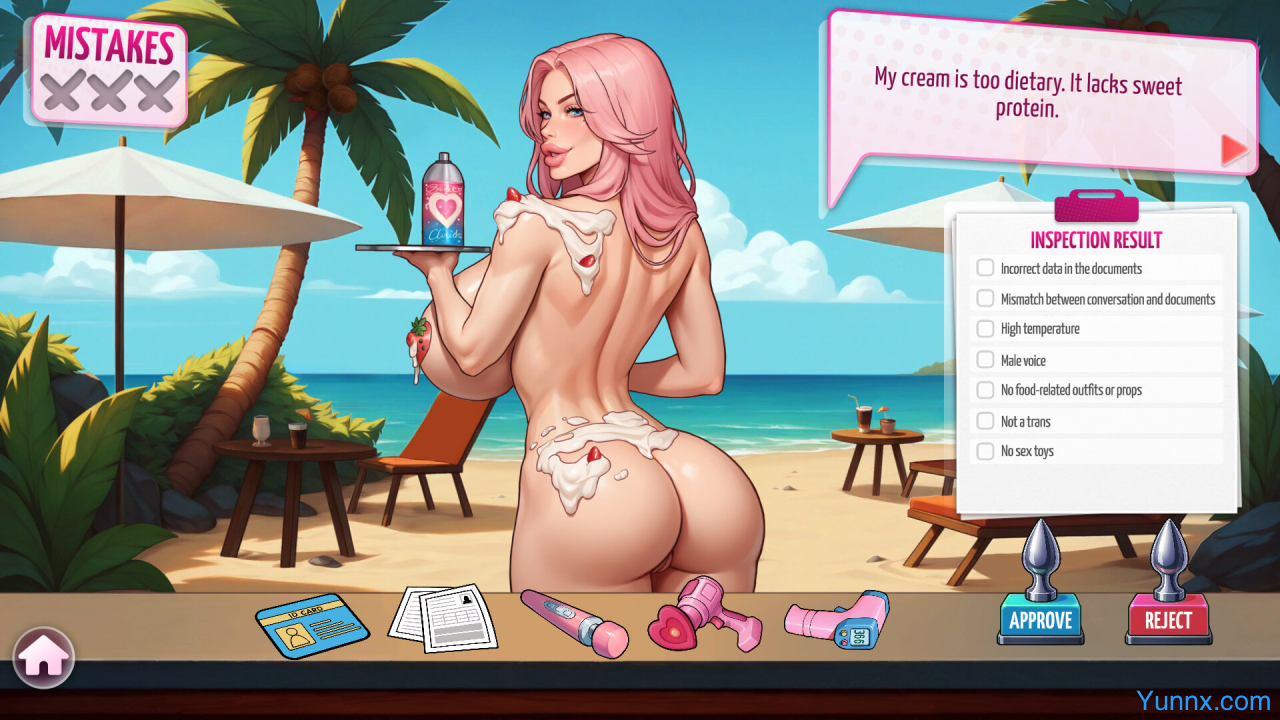
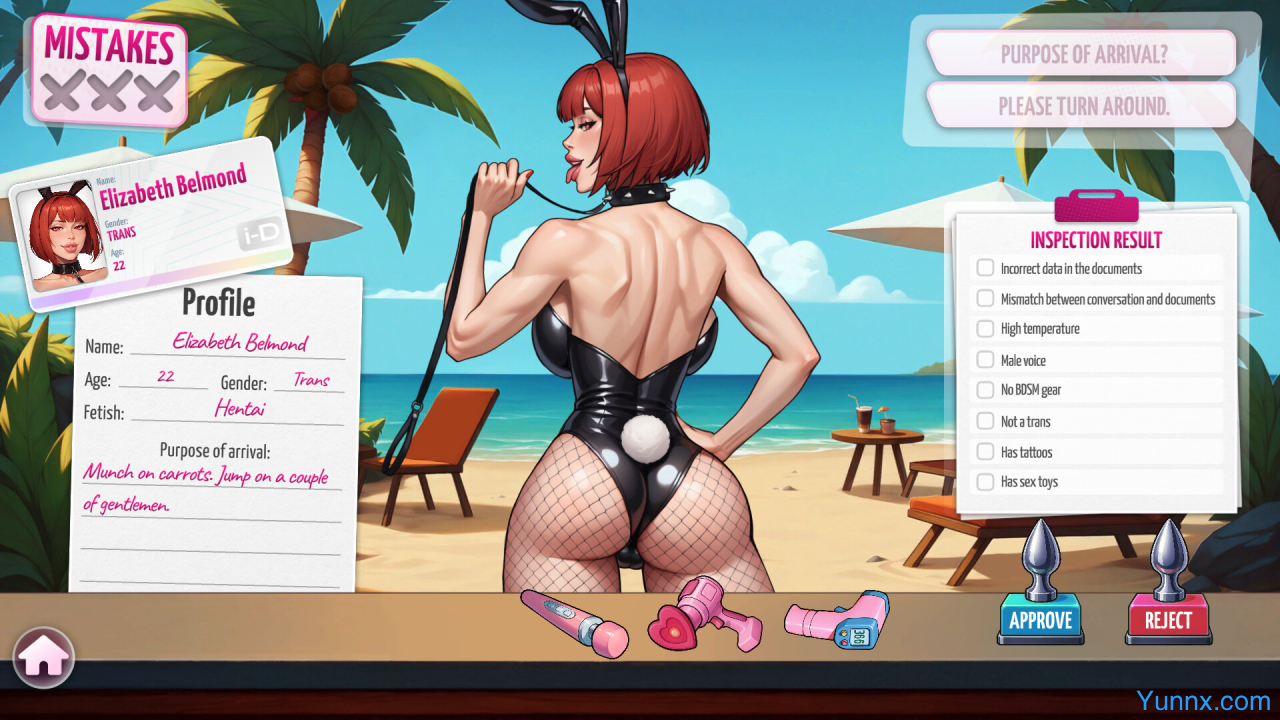

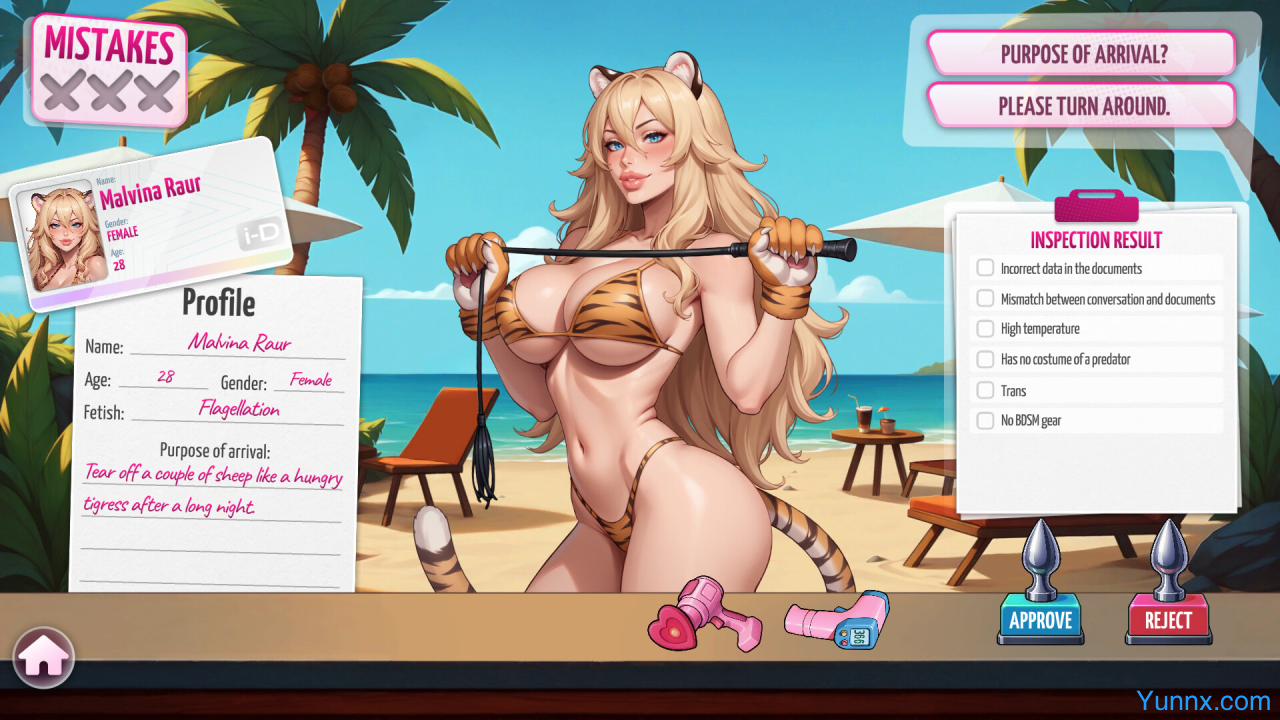

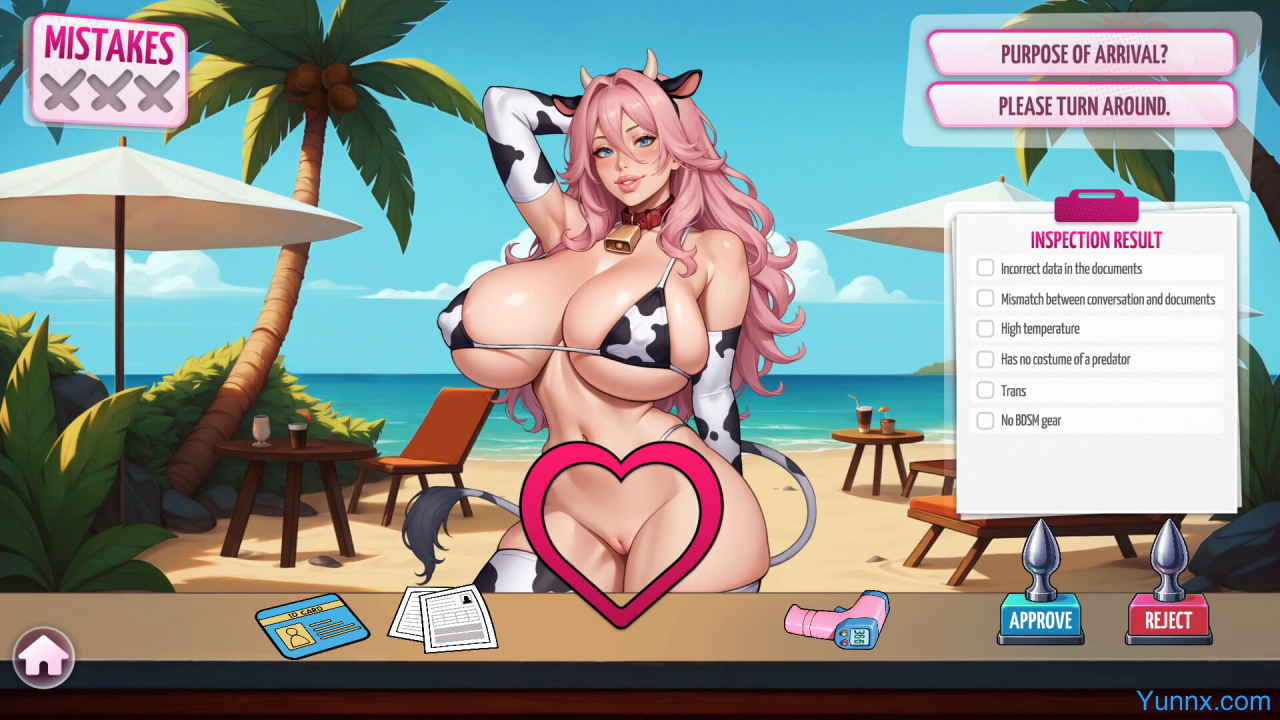

Futa Zone: Lewd Control immerses players in the role of a border officer at an exclusive, lust-driven VIP resort where every entry decision balances desire and authority. Inspect guests, uncover hidden kinks, and wield the power to admit or deny based on obedience, taboo appeal, or personal attraction. This adult-themed simulation blends strategic choice-making with provocative storytelling, set in a world where power dynamics shift with each inspection and the line between enforcer and participant blurs.
World-Building and Immersive Setting
1. The game unfolds at a clandestine resort catering to elite guests with exotic tastes, where aesthetics blend opulent luxury with provocative design. Environments range from neon-lit reception halls to private suites adorned with thematic decor, enhancing the sense of a forbidden paradise .
2. A dynamic day-night cycle and weather system affect guest behavior and inspection scenarios. Under the cover of rain or darkness, guests may attempt to smuggle contraband or use seductive distractions to bypass protocols .
3. Lore-rich elements include hidden factions among the guests—such as secret societies competing for influence—and a backstory of the resort’s founding, revealed through collectible documents and dialogue choices that shape the protagonist’s motivations .
Gameplay Mechanics and Player Agency
1. An in-depth inspection system requires players to scan luggage, analyze biometric data, and decipher cryptic travel documents. Mini-games like fingerprint matching or body scanner puzzles determine whether guests are flagged for further interrogation or granted passage .
2. A "Kink Meter" tracks guest arousal and compliance, influencing their willingness to divulge secrets or offer bribes. Strategic use of tools like truth serums or psychological pressure can unlock exclusive scenes but risks escalating tension with resort management .
3. Branching narrative paths allow players to align with factions—such as the resort’s security branch or a rebellious guest network—each offering unique missions, from exposing corruption to orchestrating escapes, leading to vastly different endings .
Character Depth and Interaction
1. Guests feature detailed backgrounds and evolving relationships, with personalities ranging from shy submissives to dominant schemers. Their reactions to inspections change based on prior choices; denying entry to a powerful figure may trigger retaliation, while approval could yield favors .
2. A relationship system with romanceable characters includes futanari-specific arcs, where emotional intimacy unlocks private scenes and alternative story outcomes. For example, gaining the trust of a frequent guest might reveal resort secrets or invite the player into exclusive parties .
3. Supporting characters like rival officers or resort managers provide quests that test morality—such as covering up a scandal or sabotaging a colleague—with rewards ranging from career promotions to blackmail material .
Visual and Audio Design
1. High-quality art emphasizes expressive character designs and atmospheric locales, with outfits and environments reflecting themes of authority and seduction. Visual cues like flushed cheeks or nervous gestures during inspections add layers of immersion .
2. A responsive soundtrack shifts between tense, ambient tones during inspections and sultry melodies during intimate moments. Voice acting for key characters enhances emotional weight, with whispers or demands making interactions feel personal .
3. Customization options for the protagonist’s uniform and tools allow players to project individuality, while unlockable gallery content rewards thorough exploration with concept art and behind-the-scenes insights .