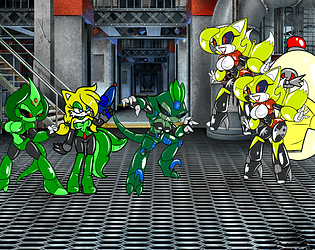





Navigate surreal landscapes with Hina, unraveling spatial puzzles and cryptic clues across shifting environments to guide her home. Each step uncovers fragmented stories and secrets, shaping a journey where curiosity is both weapon and compass.
Core Gameplay Mechanics
1. Puzzle-Driven Exploration: Traverse labyrinthine locations, using physics-based interactions—like tilting platforms or manipulating light—to bypass obstacles.
2. Dynamic Story Discovery: Scattered journals, holograms, and NPC encounters piece together Hina’s past and the city’s collapse, with hidden paths unlocking deeper lore.
3. Adaptive Challenges: Puzzles scale difficulty based on player proficiency, balancing accessibility and mental rigor while rewarding lateral thinking.
World Design & Atmosphere
1. Ever-Shifting Environments: From neon-drenched underground tunnels to crystalline ruins, each biome shifts gameplay and visuals, demanding adaptation.
2. Ambient Interaction: Touch objects to trigger animations or subtle sounds—overgrown vines might hide switches, while flickering lights signal danger.
3. Haunting Aesthetic: A minimalist art style merges hand-painted backgrounds with pixel-perfect puzzles, evoking a dreamlike yet eerie atmosphere.
Narrative & Emotional Impact
1. Hina’s Growth: Her decisions—helping NPCs, avoiding conflicts, or scavenging—alter relationships and gameplay. Empathy may unlock shortcuts, while indifference risks new threats.
2. Moral Ambiguity: Choices lack clear “right” answers. Rescuing a trapped stranger might earn aid… or reveal they’re a fugitive hunted by factions.
3. Fragmented Legacy: Collectible recordings and artifacts reveal the city’s collapse—corporate greed? A forgotten experiment?—with endings depending on how much you uncover.
Unique Features for Adventure-Seekers
1. Infinite Replayability: Multiple paths lead to varied endings, including bittersweet conclusions where Hina chooses to stay, or a tragic loop repeating her exile.
2. Co-op Puzzle Solving: Play solo or pair with a friend via split-screen, tackling collaborative challenges that require synchronized timing and trust.
3. Soundtrack as a Tool: A reactive score shifts melodies to signal clues—listen closely for hints in dissonant notes or sudden silences.