


Melinda's Life plunges players into a hypersexualized dystopia where a dominant religion enforces male sanctity. Choose from four distinct classes—Breeder, Bimbo, Stepford, or Gimbo—each offering unique gameplay angles. As you navigate this oppressive world, you unravel a pervasive conspiracy that challenges everything you’ve been taught. With adult themes and narrative depth, the game blends role-playing choices with provocative storytelling.
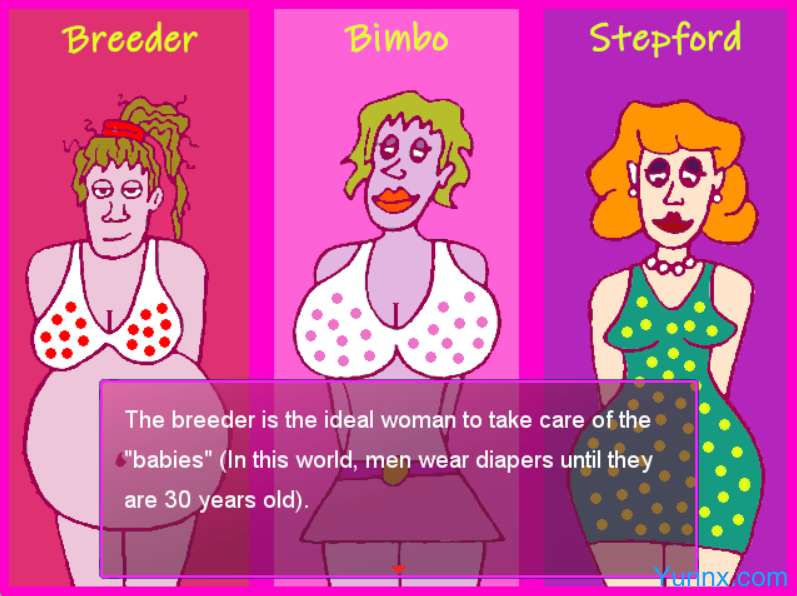
Class Selection and Character Dynamics
1. Breeder Class Focus: Centered on fertility and societal expectations, this path emphasizes nurturing alliances and leveraging maternal influence to gain power. Your choices affect population dynamics and resource control within the game’s rigid hierarchy.
2. Bimbo Class Archetype: Embrace a persona of exaggerated femininity to disarm opponents through charm and seduction. This class excels in social manipulation, opening alternate paths to information and resources.
3. Stepford Conformity: Perfect for players who prefer subtlety, this class thrives on appearing compliant while secretly gathering evidence against the regime. Its gameplay rewards patience and strategic obedience.
4. Gimbo Hybrid Approach: Combines elements of Bimbo and strategic roles, allowing fluid adaptation between overt seduction and covert operations. This class balances immediate rewards with long-term conspiracy unraveling.
Worldbuilding and Religious Mechanics
1. Dogmatic Society Rules: The world operates under the Sacred Male Doctrine, where men hold divine status but are often puppets of larger forces. Daily rituals, mandatory worship, and gendered laws shape every interaction.
2. Economic Systems: Engage in tasks like pleasure servicing, artifact trading, or propaganda creation to earn credits. The economy reflects the patriarchy, with women’s labor undervalued yet essential for system stability.
3. Environmental Storytelling: Explore zones like the Temple of Submission and the Shadow Markets, where visual cues and ambient dialogues hint at hidden truths. Each location layers clues about the conspiracy’s scope.
Narrative Progression and Conspiracy Unveiling
1. Branching Quest Design: Early missions seem routine—appeasing male figures or participating in ceremonies—but gradually reveal inconsistencies. Side quests introduce rebel contacts or forbidden texts that question the status quo.
2. Faction Allegiances: Align with underground movements, religious zealots, or opportunistic merchants. Each faction offers unique missions, from smuggling evidence to sabotaging rituals, impacting how the conspiracy unfolds.
3. Twist Revelations: The game subverts initial assumptions by exposing the Sacred Male Doctrine as a tool for control. Late-game discoveries reveal women engineered the system, adding layers of psychological complexity.
Gameplay Features and Replayability
1. Choice-Driven Consequences: Dialogue options and romantic engagements influence character relationships and ending variants. Pursuing intimacy with key NPCs can unlock exclusive conspiracy insights.
2. Skill Customization Trees: Each class has unique upgradable abilities, such as the Breeder’s persuasion perks or the Bimbo’s allure enhancements. Players can hybridize skills for niche strategies.
3. Multiple Endings: Twelve distinct endings reflect choices around rebellion, compliance, or reformation. Secret achievements encourage replays to explore class-specific story arcs.