




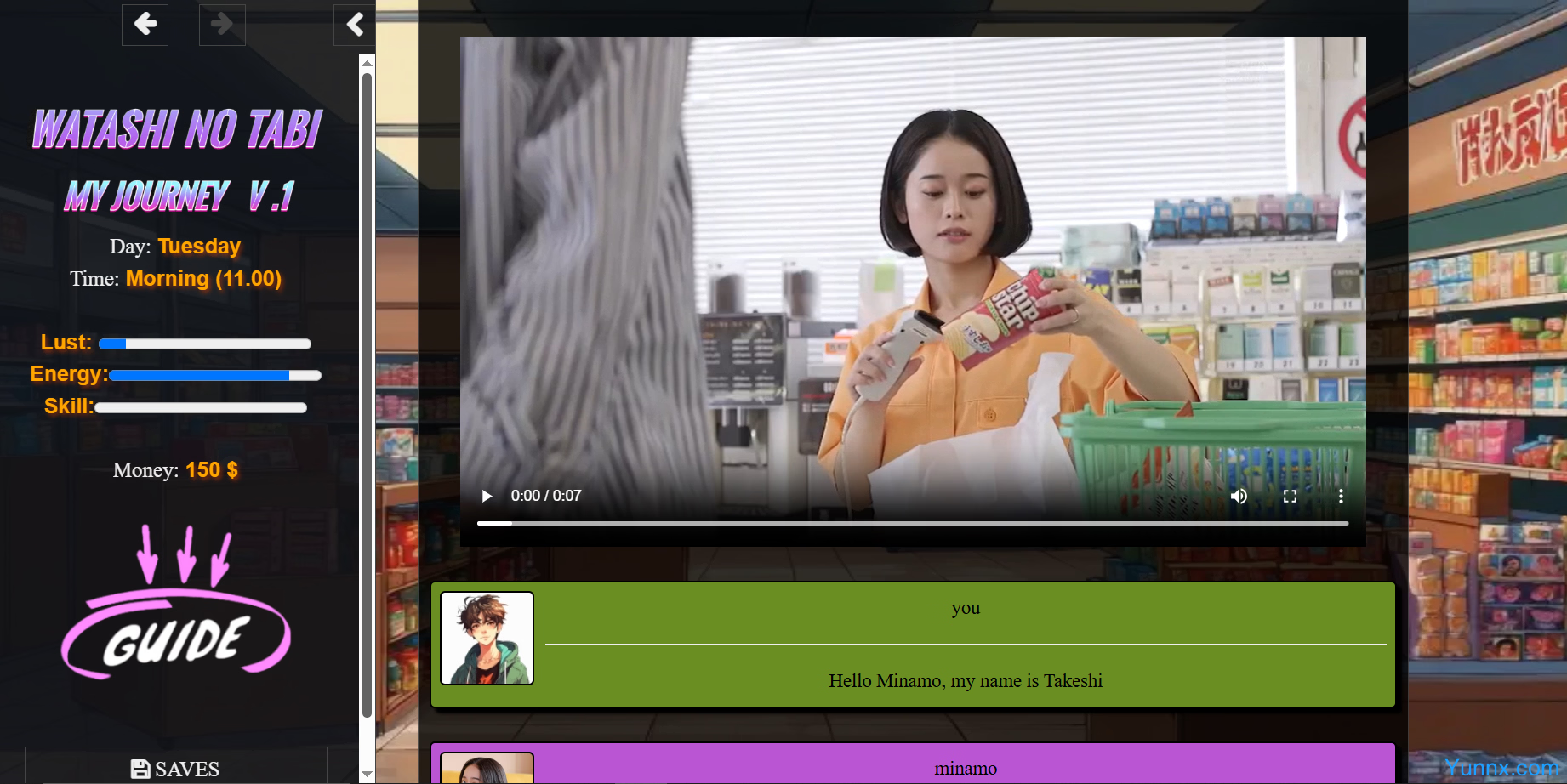
"Watashi no tabi" is a poignant narrative-driven journey following a young man leaving his hometown to reconnect with his estranged father’s new family in a bustling city, exploring fractured bonds, identity, and the weight of familial legacy amid emotional growth and urban anonymity.
1. A Fragile Reconciliation
The game centers on mending a divided family’s past:
• Players navigate the protagonist’s complex relationship with a father he rarely saw post-divorce, now living with a stepparent and half-siblings.
• Tensions rise as choices about loyalty, forgiveness, and cultural expectations shape relationships in a fragile new home.
• Subtle dialogues and hidden memories reveal the emotional cost of past abandonment and present compromise.
2. Urban Identity & Growth
The protagonist’s evolution unfolds in a fast-paced cityscape:
• Balancing independence in a new environment with obligations to his father’s family tests self-discovery.
• Side quests highlight struggles like navigating part-time jobs or city life’s pressures, mirroring real-world adulthood.
• Moral dilemmas force players to prioritize personal goals or familial duty, altering story paths permanently.
3. Intimate Storytelling
A story-driven experience with emotional depth:
• Branching narratives explore themes of belonging through nuanced character interactions, including his mother’s unresolved grief and his own guilt over leaving home.
• A minimalist yet evocative art style mirrors the protagonist’s inner turmoil, with symbol-rich environments (e.g., a dimly lit apartment vs. vibrant city lights).
• Voice acting and a haunting score amplify moments of tension or tenderness, like reconciliation attempts or silent walks through neon-lit streets.
4. Universal Resonance
Designed for players seeking:
• A relatable exploration of family dynamics beyond clichés, avoiding melodrama in favor of quiet, introspective choices.
• Multiple endings based on decisions that reflect personal ethics, from self-sacrifice to prioritizing autonomy.
• A bittersweet tone that questions whether home is a place—or the courage to rebuild connections.