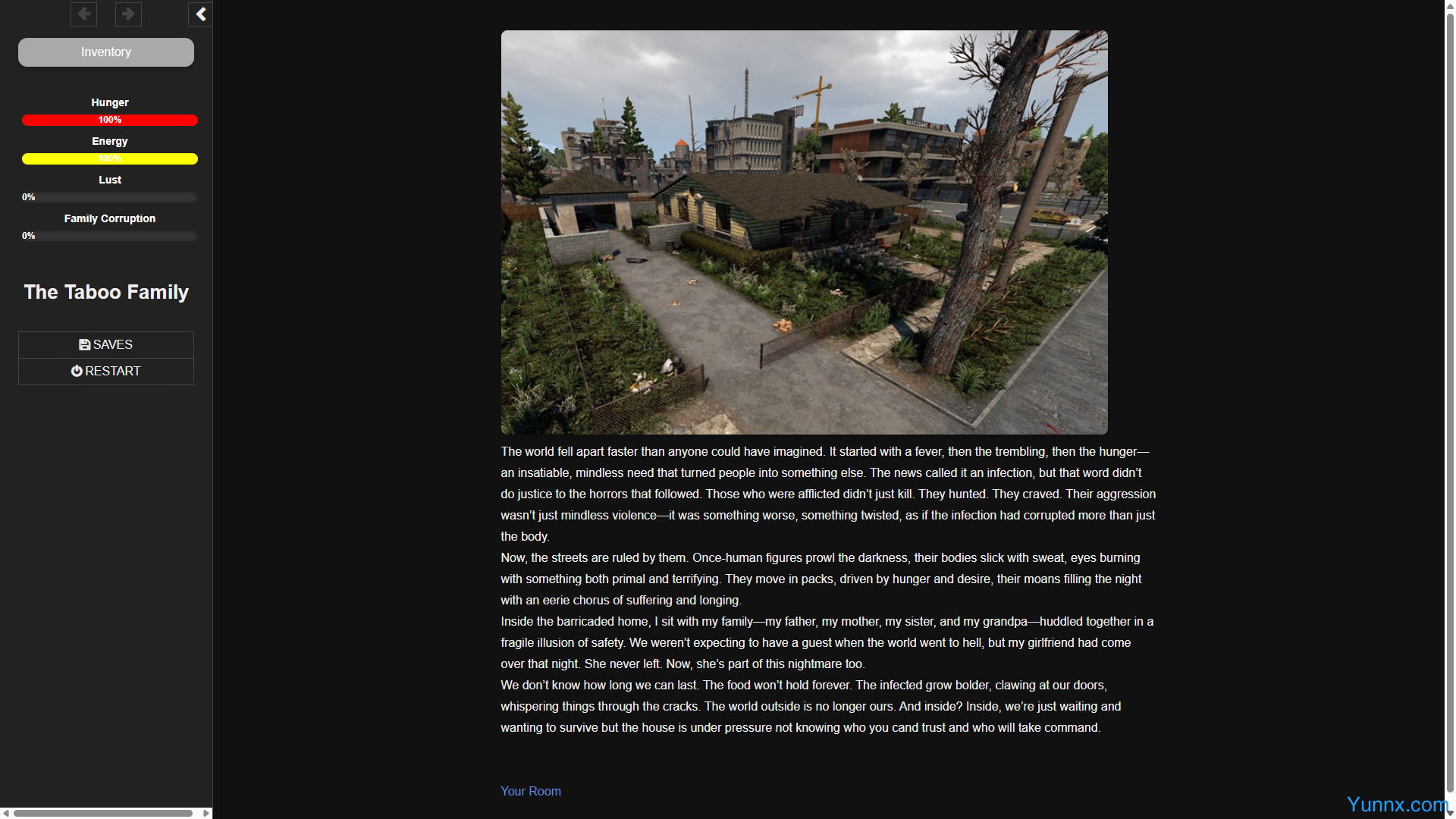

In a world shattered by a viral outbreak that turns humanity into lust-driven creatures, you find refuge in your childhood home with your family and girlfriend. As external threats loom, internal dynamics shift dramatically, blurring lines between survival, desire, and morality. This narrative-driven game explores psychological tension, control, and emotional erosion in a confined space where every choice determines how far your family will fall.
Game Setting & Worldbuilding
Immerse yourself in a post-apocalyptic environment where the real battle isn’t against monsters outside but against desires within.
1. Claustrophobic Home Environment: The entire game unfolds within a meticulously detailed house, with each room holding secrets, memories, and opportunities for interactions. The environment evolves visually and emotionally as relationships decay or transform, reflecting the psychological state of characters.
2. Viral Outbreak Lore: The world outside is plagued by "lust-driven creatures," but the game avoids zombie tropes by focusing on the infection’s psychological impact. Notes, news fragments, and character dialogues reveal how society collapsed, emphasizing human flaws over supernatural elements.
3. Dynamic Time System: Days and nights cycle realistically, influencing character behaviors. Nights heighten tension, with increased risks of external threats and intimate encounters, while daylight focuses on resource management and dialogue-driven progression.
Gameplay Mechanics
The game blends choice-based storytelling, survival management, and relationship simulation to create a deeply personal experience.
1. Choice-Driven Narrative: Every decision alters the story’s trajectory, from dialogue options to actions like sharing resources or isolating characters. branching paths lead to multiple endings, ranging from tragic corruption to reluctant redemption.
2. Resource & Trust Economy: Manage scarce supplies (food, medicine, tools) while balancing "Trust Points" with each character. Allocating resources to specific family members affects their loyalty, mental stability, and willingness to support—or betray—you.
3. Psychological Stress System: Characters exhibit deteriorating mental states through visual cues (e.g., trembling hands, empty stares) and gameplay debuffs. Ignoring their needs triggers breakdowns, escalating conflicts, or irrational decisions that jeopardize the group.
Characters & Relationships
The cast features complex individuals whose personalities evolve based on player interactions and environmental pressures.
1. Protagonist’s Role: As the central character, you mediate conflicts, initiate conversations, and make moral choices. Your backstory (revealed through flashbacks) influences initial relationships but can be rewritten through actions.
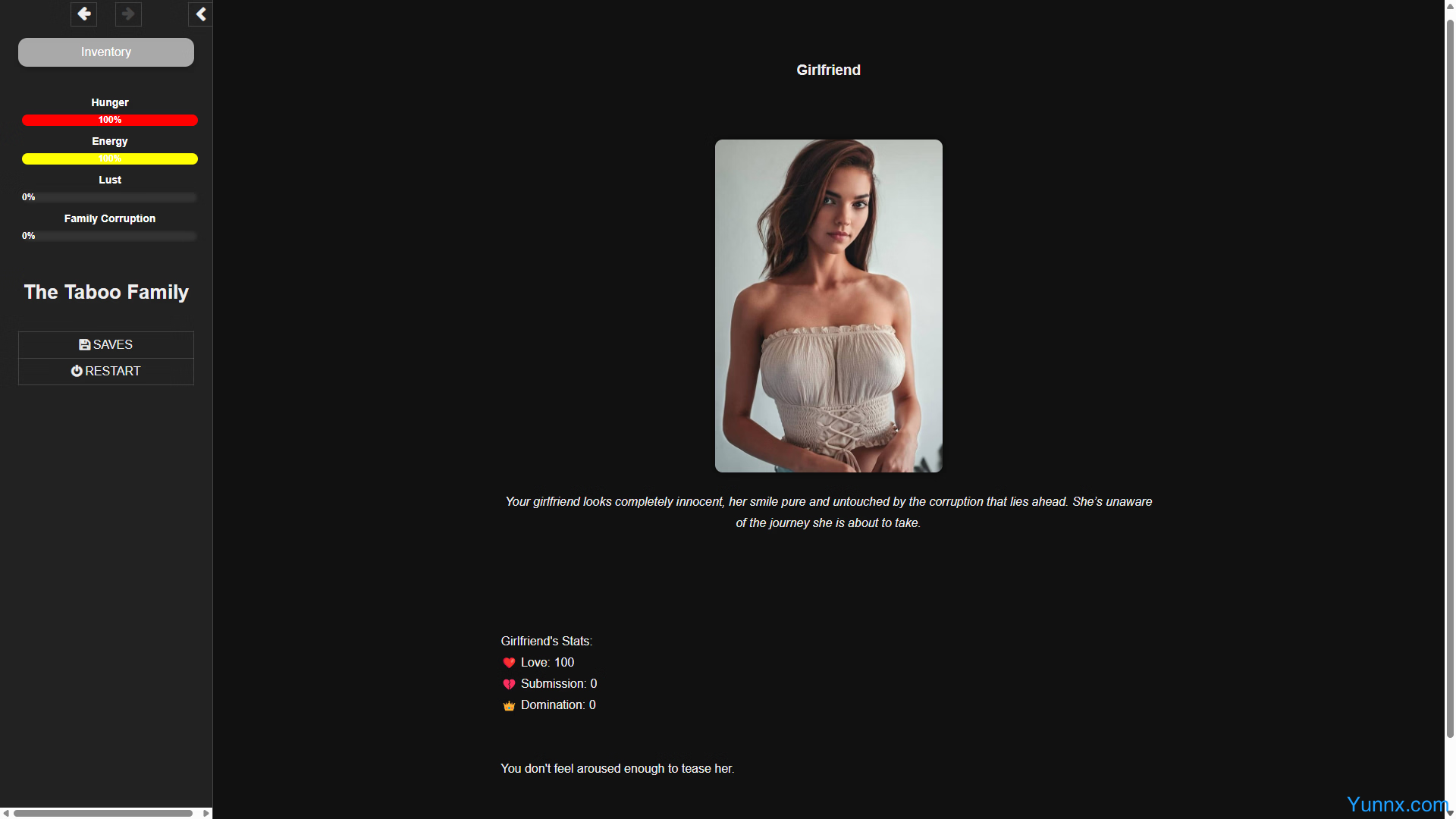
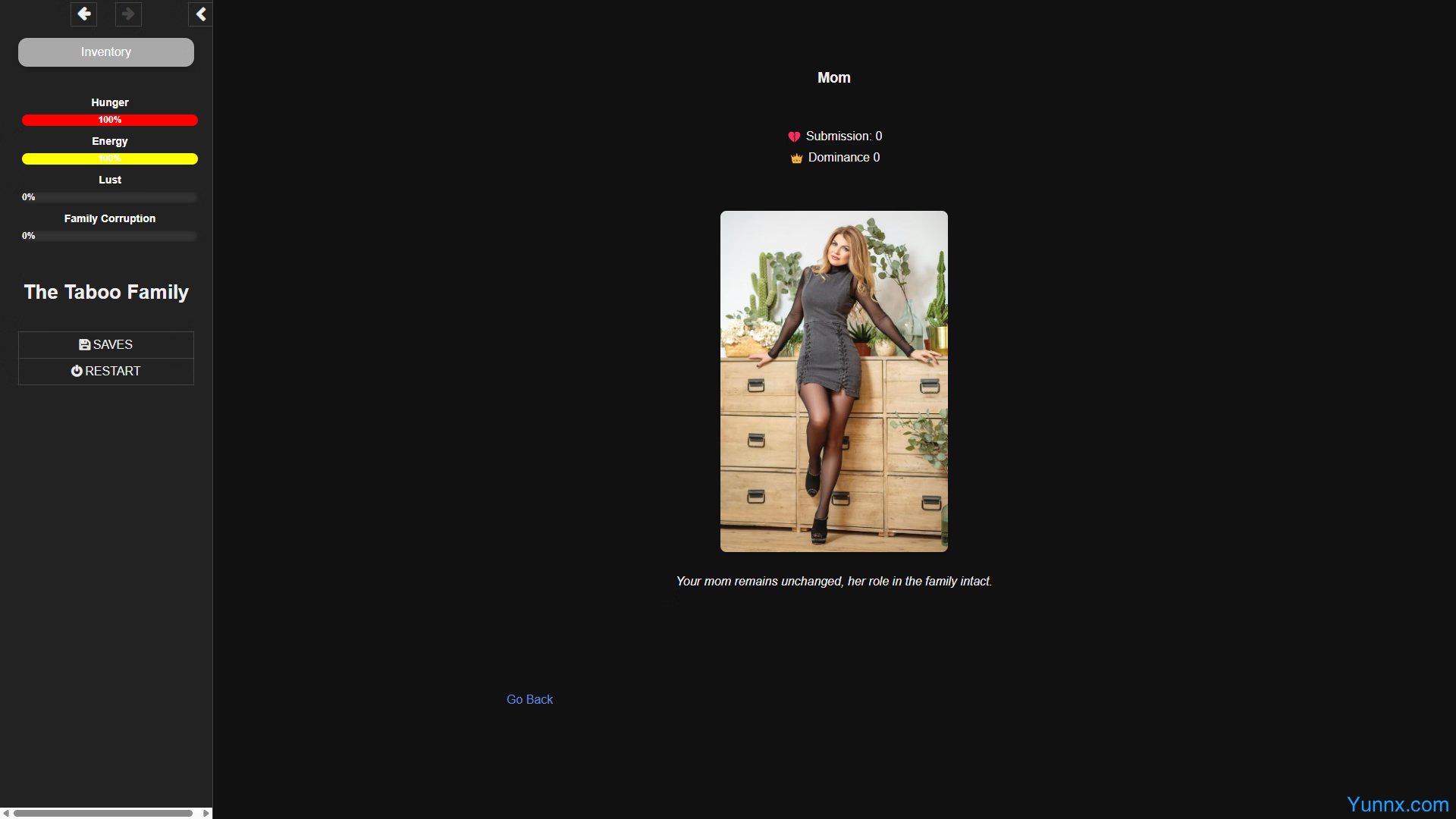
2. Family Dynamics: Each member has unique traits: Mom’s emotional distance masks resilience, Dad’s dominance hides fear, Sister’s curiosity leads to vulnerability, Grandpa’s military past fuels his pragmatism, and Girlfriend’s loyalty is tested by secrets. Their interrelationships change independently, creating unpredictable alliances or rivalries.
3. Intimacy & Corruption System: Build emotional or physical connections with characters through quests and conversations. However, exploiting these relationships risks "Corruption Levels," which can unlock dark story branches but permanently alter character behaviors and endings.