

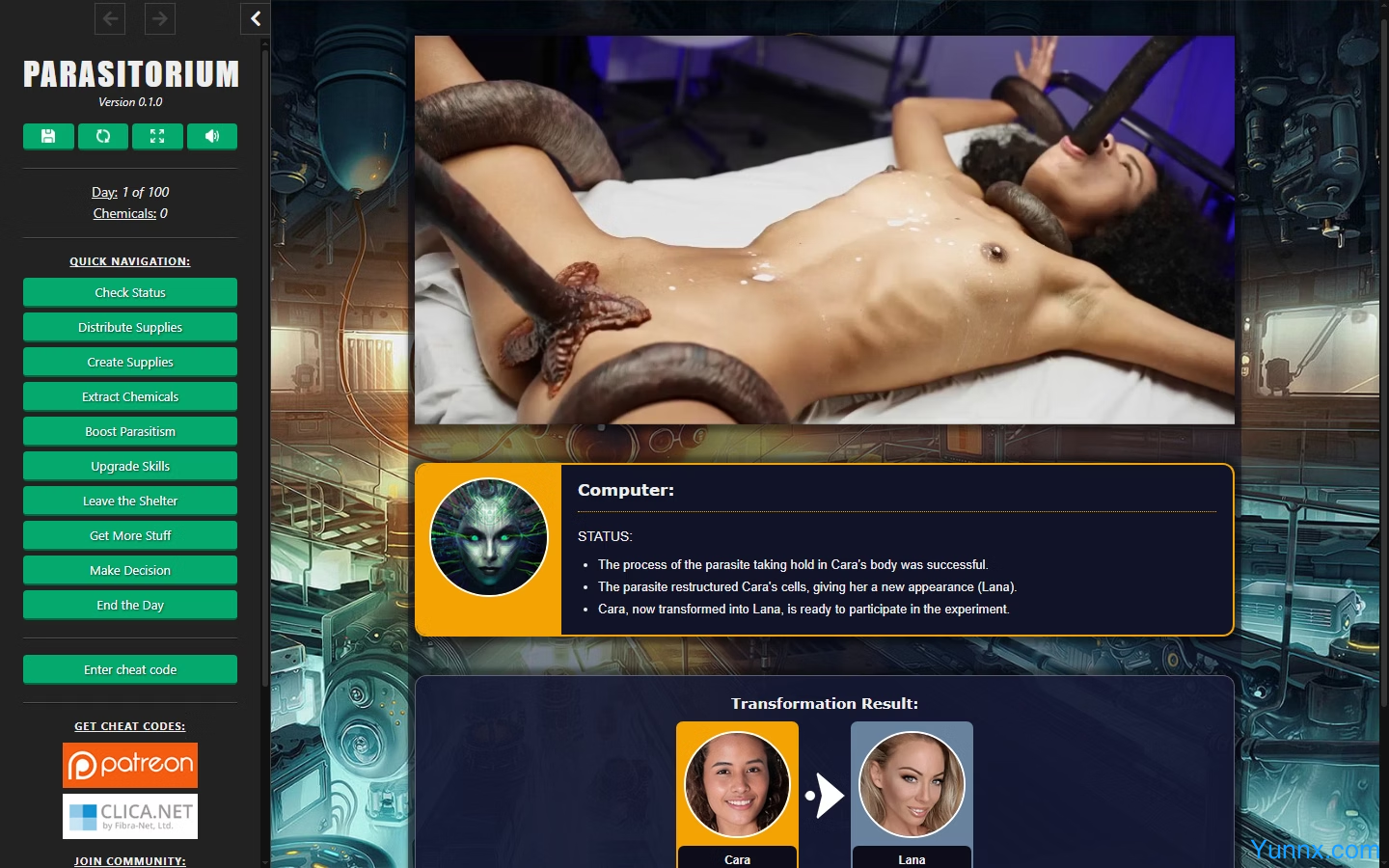

In Parasitorium, players infiltrate the clandestine N.E.R.D. lab to manipulate parasitic lifeforms that grant hosts shapeshifting abilities and superhuman traits, blending strategic survival with morally gray choices in a high-stakes roguelike experiment.
Innovation in Bio-Horror Mechanics
1. Parasite Mastery: Control invasive organisms that merge with human hosts, granting abilities like mimicry, enhanced strength, or mental manipulation, but risk destabilizing mutations.
2. Ethical Dilemmas: Decide whether to exploit subjects for data or protect them—each choice alters lab dynamics, alliances, and the parasites’ uncontrollable spread.
3. Dynamic Ecosystems: The lab itself evolves as experiments backfire, creating shifting hazards like toxic zones, security lockdowns, and hostile hybrid creatures.
Survival Under Scrutiny
1. Time-Pressed Experiments: Conduct trials within strict deadlines, balancing resource scavenging, infection management, and evading facility protocols.
2. Identity Theft & Deception: Assume any volunteer’s identity to access restricted areas, but avoid detection by guards or AI monitors tracking behavioral anomalies.
3. Unpredictable Outcomes: Parasites may enhance intelligence or induce madness—players must adapt to shifting priorities as goals collide with escalating chaos.
Inspired by Classic Chaos, Elevated by Ethics
1. Retro-Vibe Mechanics: Heavily inspired by the frenetic pace of 60 Seconds! and 60 Parsecs!, with pixel-art visuals and twitch-based challenges.
2. Narrative Layers: Beneath the survival loop lies a hidden storyline questioning bioethics, as players uncover the lab’s dark purpose and the volunteers’ clandestine resistance.
3. Rewarded Replayability: Multiple endings hinge on parasitic integration levels, moral standings, and whether the player “saves” the friend—or becomes the new infection vector.