


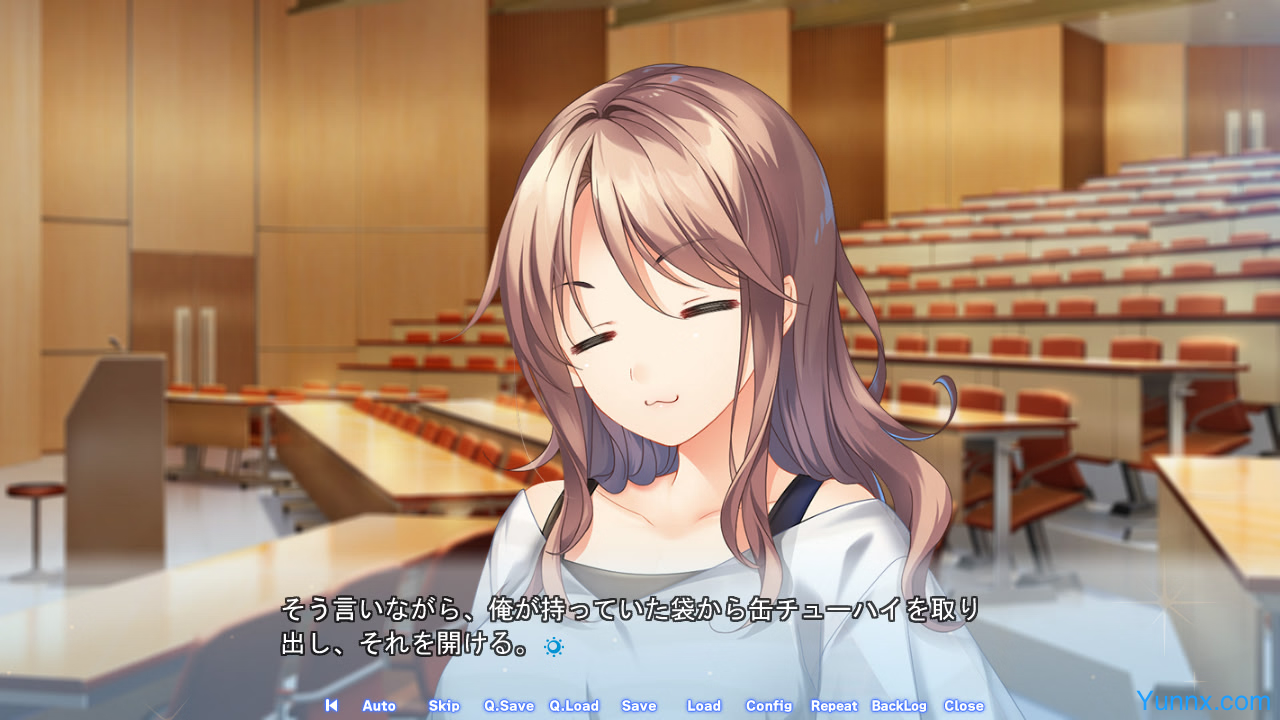

Happy Weekend is an 18+ college life visual novel where protagonist Yamabuki Minato navigates his third year of freedom—balancing studies, part-time work, dating, and growing doubts about his indecisive routine—until four pivotal encounters spark a decisive shift toward defining his future path.
Narrative Setting & Protagonist Conflict
1. The game immerses players in the authentic Japanese college moratorium period, portraying Yamabuki Minato's third-year experience as a time of unstructured freedom where academic pressures, casual employment, and social exploration intertwine without clear direction.
2. His initial enjoyment of drinking with friends, spontaneous hangouts, and lighthearted dating gradually gives way to quiet anxiety as he questions whether drifting through days without purpose constitutes a meaningful life.
3. This internal turning point occurs specifically in spring of his third year, triggering heightened self-awareness that transforms passive observation into active intention regarding his relationships and daily choices.
Core Encounters & Romance Route Structure
1. Players interact with four distinct female characters representing key social spheres: a diligent freshman who consistently assists him with academic or logistical tasks, a woman met spontaneously during a group dating event (goukon), a familiar face who regularly visits his part-time workplace, and an old acquaintance whose relationship history remains emotionally unresolved history with the old acquaintance introduces nuanced tension, requiring players to navigate past misunderstandings or unresolved feelings while building present-day trust.
3. Each character offers a fully branched storyline with unique conflict resolution paths, where early decisions significantly alter accessibility to later scenes, dialogue options, and ultimate relationship outcomes ranging from committed partnerships to amicable separations or lingering ambiguity.
Player Agency & Consequence System
1. Gameplay centers on meaningful choice architecture rather than rote progression, where seemingly minor daily decisions—like accepting an extra shift, declining a study invitation, or initiating contact after silence—accumulate to shift affection flags and unlock specific character-focused narrative branches.
2. The game avoids binary morality scales; instead, it tracks nuanced parameters such as emotional availability, communication effort, and respect for boundaries, which dynamically influence whether routes evolve into healthy intimacy, fleeting connections, or deliberate separations based on mutual growth.
3. Multiple save slots are essential for exploring all route variations, as critical junctures often occur weeks apart in-game time, with consequences only manifesting during later seasonal events like summer festivals, winter breaks, or graduation preparations, encouraging replayability to witness divergent epilogues.