




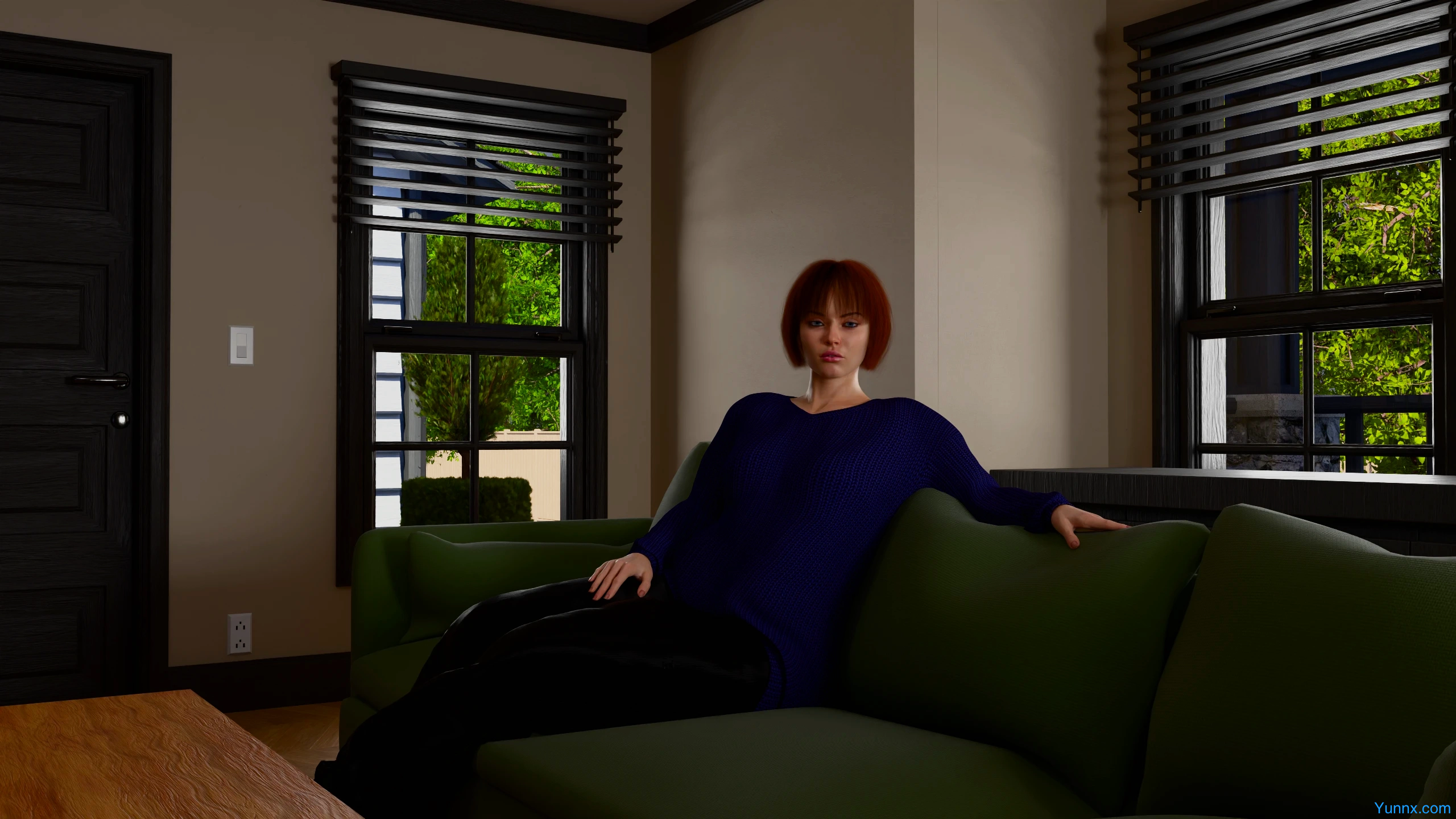
You show up at a secluded property with a house bigger than anywhere you've lived — and three women who definitely weren't expecting company. LittleBigSecret is a slow-burn adult VN built around freeform exploration, light environmental puzzling, and dialogue choices that actually stick. Three central characters, one house full of locked drawers and half-truths, and a setting that rewards the people curious enough to poke where they shouldn't.
The House Isn't Empty — It's Just Full of Secrets
1. The setup feels deliberately low-pressure at first. You arrive at the property — a standalone house with grounds that stretch farther than they should — and the game doesn't rush you through a tutorial. You walk in, you look around, you get the lay of the rooms. That's when it clicks: this isn't a backdrop. The house is active. Drawers open. Notes are tucked where they shouldn't be. The air feels lived-in in ways no one's explained yet.
2. Freedom of movement is the real draw here. You're not locked to a scripted path or a rigid event trigger list. You can drift between the kitchen, the hallways, the upstairs rooms, the outbuildings — examining objects, re-reading the same photo on a dresser twice, noticing a key isn't where it was yesterday. The game trusts you to be nosy, and that trust pays out in atmosphere alone.
3. But the house has rules. Some doors stay locked until you've found the right item or overheard the right conversation. Some clues only appear after a specific interaction with Jennifer, Debra, or Lara shifts the day's mood. It's the kind of design that makes you want to check the same room three times, just in case you missed something the first two passes.
Jennifer, Debra, and Lara — Three Paths, Three Sets of Teeth
1. Jennifer carries herself like she's holding the whole place together and resenting every second of it. Sharp edges, quicker smiles, the kind of woman who answers a question with a question just to watch you squirm. Get on her good side and she'll open doors — literally and otherwise. Push too hard and she'll ice you out so smoothly you'll wonder if you imagined the warmth five minutes ago.
2. Debra is a different read. Softer surface, deeper undercurrent. She's the one who'll actually sit down with you, pour the coffee, talk about things that aren't immediately useful — until they are. Half her story is in what she doesn't say while she's laughing. The puzzles connected to her arc tend to hide in plain sight: a misplaced receipt, a pattern in her schedule, a lock combination that's a date she mentioned once while distracted.
3. Lara splits the difference — playful enough to throw you off, guarded enough that you never quite land the read. She's the wildcard variable when you're trying to manage all three relationships at once. Getting close to Lara can unlock shortcuts through the house and the narrative both, but she's also the one most likely to notice when you've been snooping somewhere you weren't supposed to be.
Puzzles That Feel Like Snooping, Not Homework
1. The puzzle design here leans into the voyeuristic energy instead of fighting it. Combination locks, hidden keys, sequences tucked into notes and photo albums — none of it requires a math degree, and that's the point. The challenge is observation, not calculation. You find the clue because you actually bothered to flip the book on the nightstand, not because the game highlighted it in neon.
2. Solving something almost always feeds back into the character work. A unlocked drawer might give you blackmail material — or just context that changes how you phrase your next dialogue option with the person it belongs to. The game understands that in a house full of secrets, information is the real currency, and puzzles are just the lock on the vault.
3. It also means your first playthrough is going to be the messy one. You'll miss stuff. You'll leave a drawer unopened, skip a conversation because you assumed it was filler, and realize three scenes later that you just narrowed your own options. That's what drives the replay value — not a grind, just the knowledge that the house is still holding cards you haven't seen.
Choices That Stick — and the Endings They Earn
1. Dialogue choices in LittleBigSecret don't announce themselves as "good / bad / neutral" — they just are, which makes every conversation feel like a live wire. Agreeing too fast can look desperate. Hesitating too long can look evasive. The game tracks your rapport with each woman under the hood, and the difference between a warm invitation and a locked door is often just one sentence you chose two scenes earlier.
2. The branching isn't shotgun-style — it's focused. Your relationships with Jennifer, Debra, and Lara can overlap, conflict, and cross-wire depending on who you prioritize (or who you string along). Some scenes only unlock if two of them trust you. Some only unlock if one of them doesn't. The adult content is baked into that web — it's something you earn through curiosity, patience, and reading the room right.
3. Multiple outcomes keep the house worth revisiting. A "perfect" run where everyone's happy looks very different from a run where you played one woman against another — and both feel earned because the game never nudges you toward the "right" pick. You walked into someone else's home, started opening drawers, and the consequences are yours.