

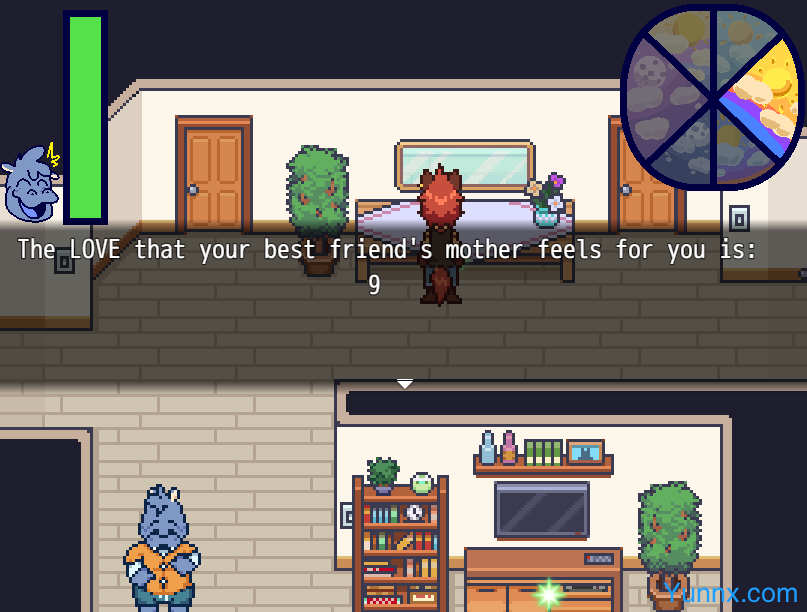
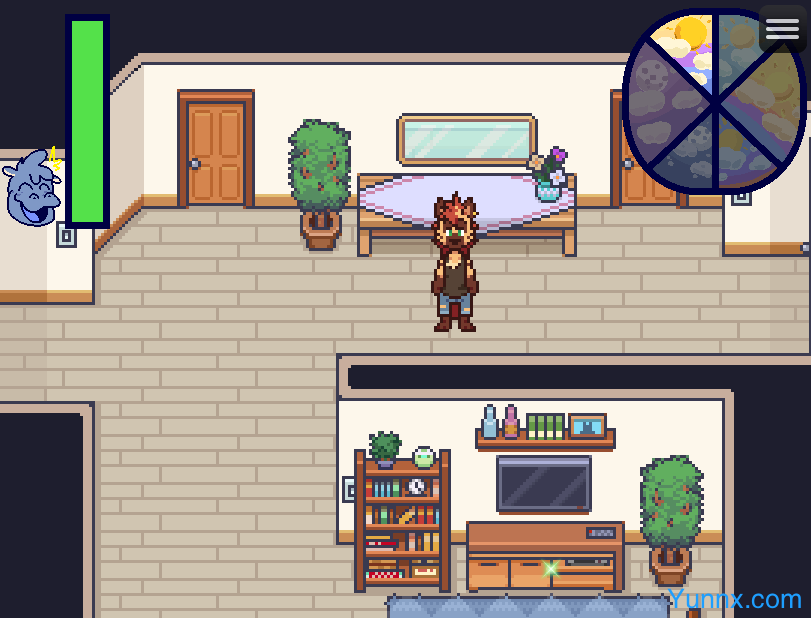
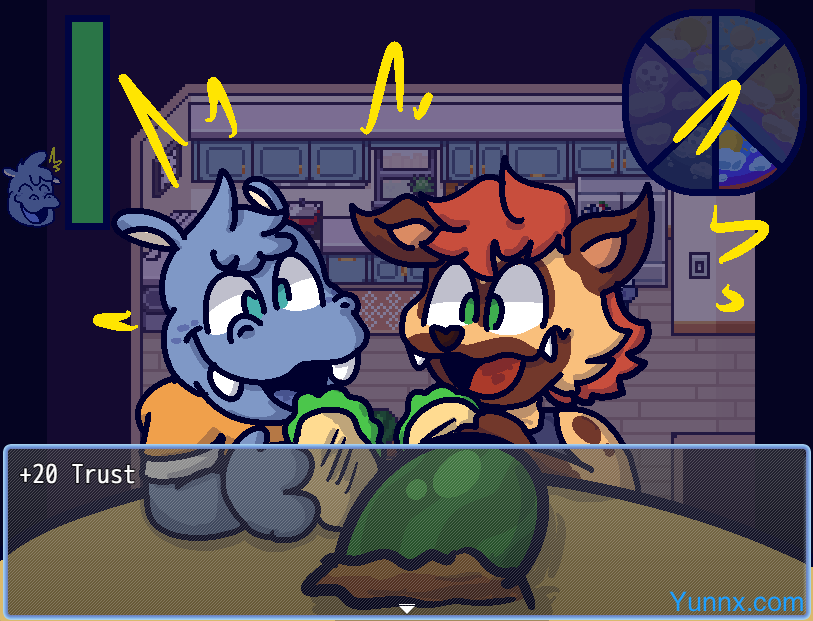

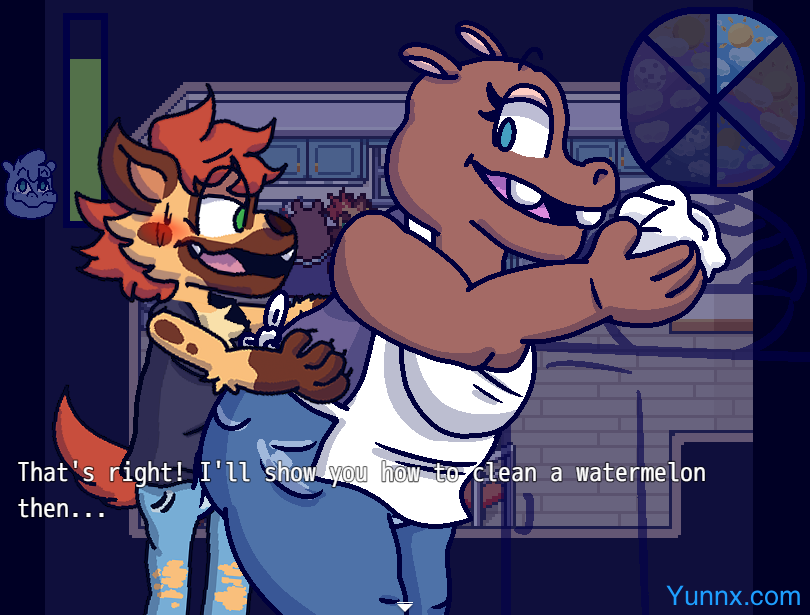
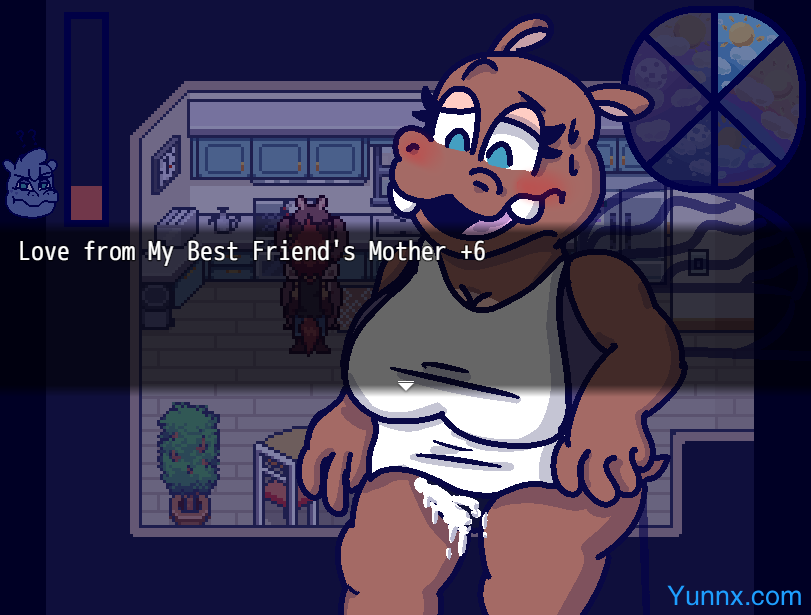
Two Weeks to Charm My Friend's Mom takes a two-week residency period as the main timeline, creating an immersive emotional interaction experience centered around taboo interaction, trust balance, and real-time scenarios. Players take on the role of a college student who lives with a friend due to a shortage of rent. Their brief stay is drawn to their friend's charming mother and they embark on a journey of actively approaching and building bonds.
Core gameplay
One is real-time scene interaction, where players need to rely on the daily activities of their friend's mother (such as cooking, cleaning, resting, etc.) to create contact opportunities. The interactive behavior needs to be in line with real life scenes without forced plot triggers;
The second is the friend suspicion system. The higher the frequency and scale of interaction with the friend's mother, the higher the friend's suspicion will increase. When the suspicion falls below the critical value, the friend will always stick to the mother, blocking the player's interaction opportunities;
The third is the trust balance mechanism, where players need to restore their trust by accompanying friends to watch TV, play games, and other activities while getting close to their mother. They need to find a balance between the two relationships and smoothly advance the plot until the end of two weeks. In addition, the game supports customizing the names of the protagonist, friends, and friends' mothers to enhance personalized immersion.
Practical Guide
1. Balanced Interactive Strategy (Core Strategy)
Adopting the "interactive cooling" cycle mode: prioritize capturing high-frequency daily scenes of friends' mothers (such as breakfast time and household chores time) for mild interaction (conversation, providing small help), and control the interaction frequency to no more than 2-3 times per day; When a friend shows signs of doubt (with a cold tone or actively interrupting interaction), immediately switch targets and engage in 1-2 common activities with the friend (prioritizing efficient ways to restore trust such as playing games or watching TV) to bring suspicion back to a safe line. Avoid focusing on a single object for a long time, which can lead to imbalanced relationships.
2. Scene interaction skills
Accurately bind the daily trajectory of friends' mothers and choose low-risk interactive scenarios: in household scenarios, actively offer help and demonstrate caring traits; Solitary scenes, such as resting in the living room or preparing meals in the kitchen, are suitable for engaging in shallow conversations and exploring their interests; Avoid crowded periods with friends present (such as afternoon game time or evening family gatherings) to reduce the risk of being caught on the spot. When interacting, prioritize choosing gentle and non intrusive options, gradually accumulate goodwill, and avoid initial excessive scale that may cause resentment or excessive suspicion from friends.
3. Archive and storyline branching control
Before key interactive nodes, it is necessary to manually save them (such as the first solo conversation with the mother or attempting physical contact), as different choices can affect favorability, skepticism, and subsequent plot branches (some options may trigger hidden scenes or affect the ending direction). If there is a high level of suspicion and the interaction channel is blocked, the archive can be read to adjust the strategy and prioritize repairing the trust relationship with friends.
Core strengths
1. High immersion real-time mechanism
Different from the fixed plot trigger of the traditional interactive text game, the game is driven by "daily activities", the interactive scene fits the real family life, and the role behavior logic is adapted in real time, so that the players have a stronger sense of substitution and get rid of the rigid sense of "following the script".
2. Strategic balance gameplay
Through the bidirectional mechanism of "suspicion trust value", the monotony of brainless strategies is broken. Players need to actively weigh the scale of interaction and trust maintenance, and each choice affects the direction of the relationship, enhancing the game's strategy and durability.
3. Personalized customization space
Support customization of the names of the protagonist, friends, and friends' mothers. Players can set character names according to their preferences, weaken fixed character constraints, and enhance their sense of belonging to the game scene and character relationships.
Core Features
1. Taboo emotional tension is full
Taking "friend mother" as the target of the strategy, combined with the identity setting of "sojourner", naturally comes with a sense of taboo and emotional conflict; The skepticism system further amplifies this tension, and every time the player approaches, there is a risk of being discovered by friends, creating a tense and exciting interactive atmosphere.
2. Relationship driven storyline branches
The plot direction is entirely determined by the player's interactive choices, with core branches revolving around "favorability accumulation" and "trust value maintenance": it can focus on enhancing the bond with the mother and unlocking intimate plots; It is also possible that improper balance can lead to friends being completely guarded, falling into an interactive deadlock, and even triggering different outcomes (such as successfully maintaining a relationship, being kicked out of the house, etc.).
3. Lightweight daily interaction
No need for complex operations and numerical cultivation, focusing on "daily dialogue+scene interaction", low gameplay threshold, suitable for casual players; The interactive content is close to family life, without exaggerated settings that are detached from reality, making the establishment of emotional bonds more realistic.
4. The sense of urgency in short-term deadlines
The fixed time limit of "two weeks" adds a clear sense of purpose and urgency to the gameplay. Players need to efficiently balance the two relationships within a limited time, promote favorability, avoid missing interaction opportunities due to slow pace, and improve game compactness.