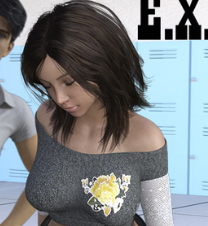



In E.X.P.E.L.L.E.D, you navigate grief and adolescence as an orphaned teen living with two contrasting siblings: disciplined Claire and rebellious Violet. Tasked with balancing household responsibilities against personal healing, your choices shape relationships while unearthing secrets about your parents' mysterious demise. This narrative-driven life sim blends emotional management, environmental storytelling, and branching consequences within a tension-filled home.
Dynamic Household Relationships
1. Sibling Dichotomy Mechanics: Claire enforces structure (e.g., curfews, chores) to maintain stability, while Violet tempts you into risky adventures like sneaking into abandoned buildings. Ignoring Claire’s rules depletes "Trust Points," risking expulsion; embracing Violet’s chaos unlocks hidden areas but triggers volatile confrontations .
2. Emotional Echo System: Objects linked to your parents (e.g., a broken watch, faded letters) trigger memory sequences where past choices resurface. Re-experiencing these moments lets you alter dialogue outcomes, rewriting character perceptions of your family’s tragedy .
3. Proximity-Based Tensions: Shared spaces evolve dynamically—leaving Violet’s skateboard in the hallway may cause Claire to trip, escalating arguments that permanently lock reconciliation quests. Room layouts can be customized to avoid triggers or force confrontations .
Healing Through Exploration & Rebellion
1. Neighborhood Fractal Design: Your town’s districts reflect psychological states—the overgrown "Grief Quarter" requires stealth to bypass patrols (Claire’s influence), while neon-lit "Rebel Row" hosts minigames like spray-painting murals to process anger (Violet’s domain). Each area’s aesthetics shift based on your emotional balance .
2. Therapeutic Crafting: Combine salvaged items into symbolic artifacts (e.g., fuse family photos with music box gears to create "Memory Orbs"). These serve as both progression tokens and therapy tools, with Violet critiquing their edginess and Claire questioning their sentimentality .
3. Consequence-Driven Secrets: Discovering parental clues (e.g., encrypted hospital bills) introduces moral dilemmas: share with Claire for stability perks (+resource access) or with Violet for underworld leads (+combat skills). Choices expose corporate cover-ups linking your parents to local elites .
Unique Systems & Replayability
1. Silhouette Ghosting: When neglecting self-care, your character’s shadow detaches and manifests as a distorted figure haunting the house. Calming it requires blending Claire’s meditation minigames with Violet’s adrenaline-chase sequences—failure risks psychological debuffs like hallucinatory enemies .
2. Time Fragmentation: Pausing gameplay doesn’t freeze events; Claire cleans while you idle, and Violet graffiti-tags rooms if ignored. The "Real-Time Consequences" system demands strategic planning, making every bathroom break or menu dive a potential narrative pivot .
3. Echoed Endings: New Game+ retains emotional stats, letting you replay pivotal moments with Claire/Violet using accumulated trauma insights. This unlocks "Catharsis Routes"—e.g., reconciling the sisters by revealing their mother’s role in your parents’ fate—with 11 endings ranging from hopeful reunion to destructive betrayal .